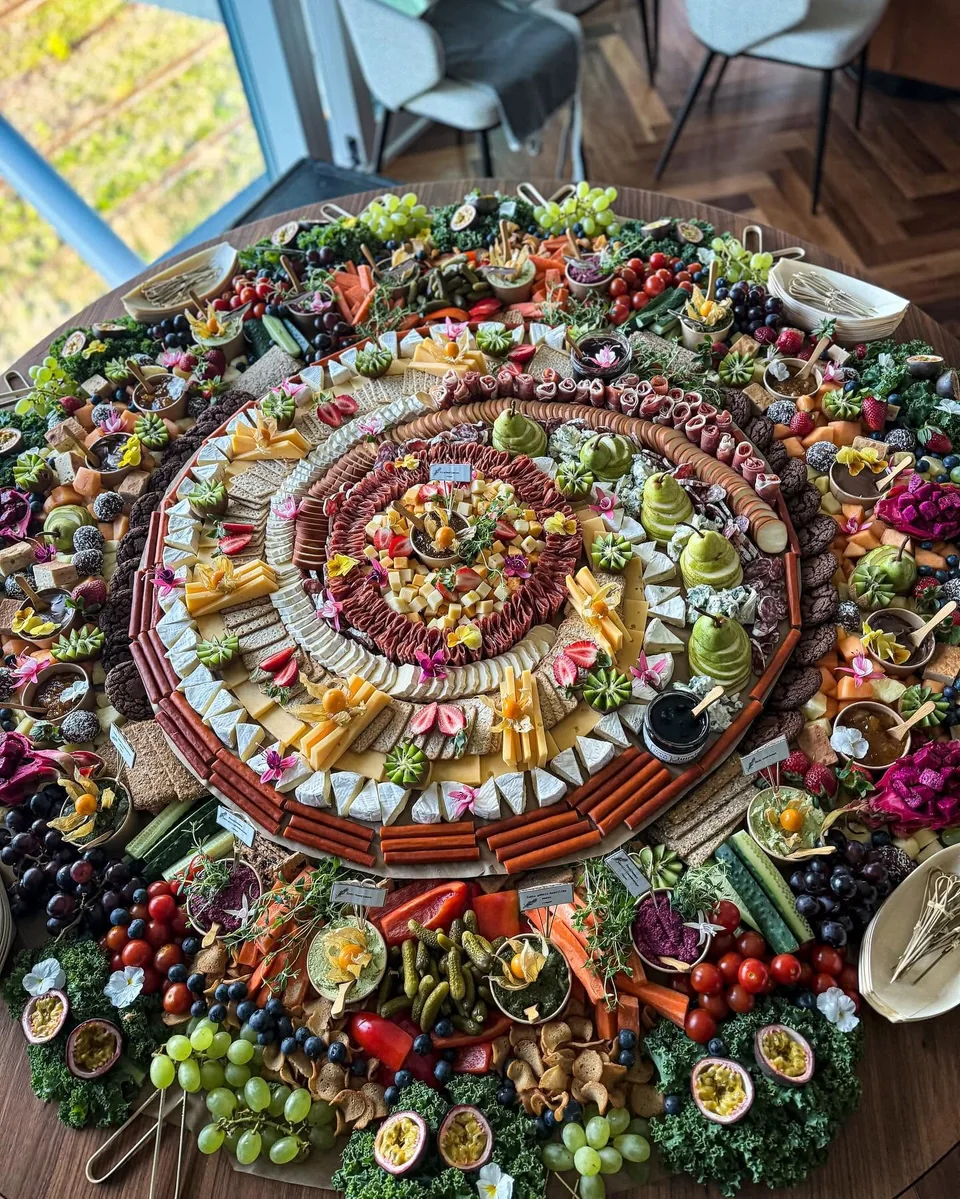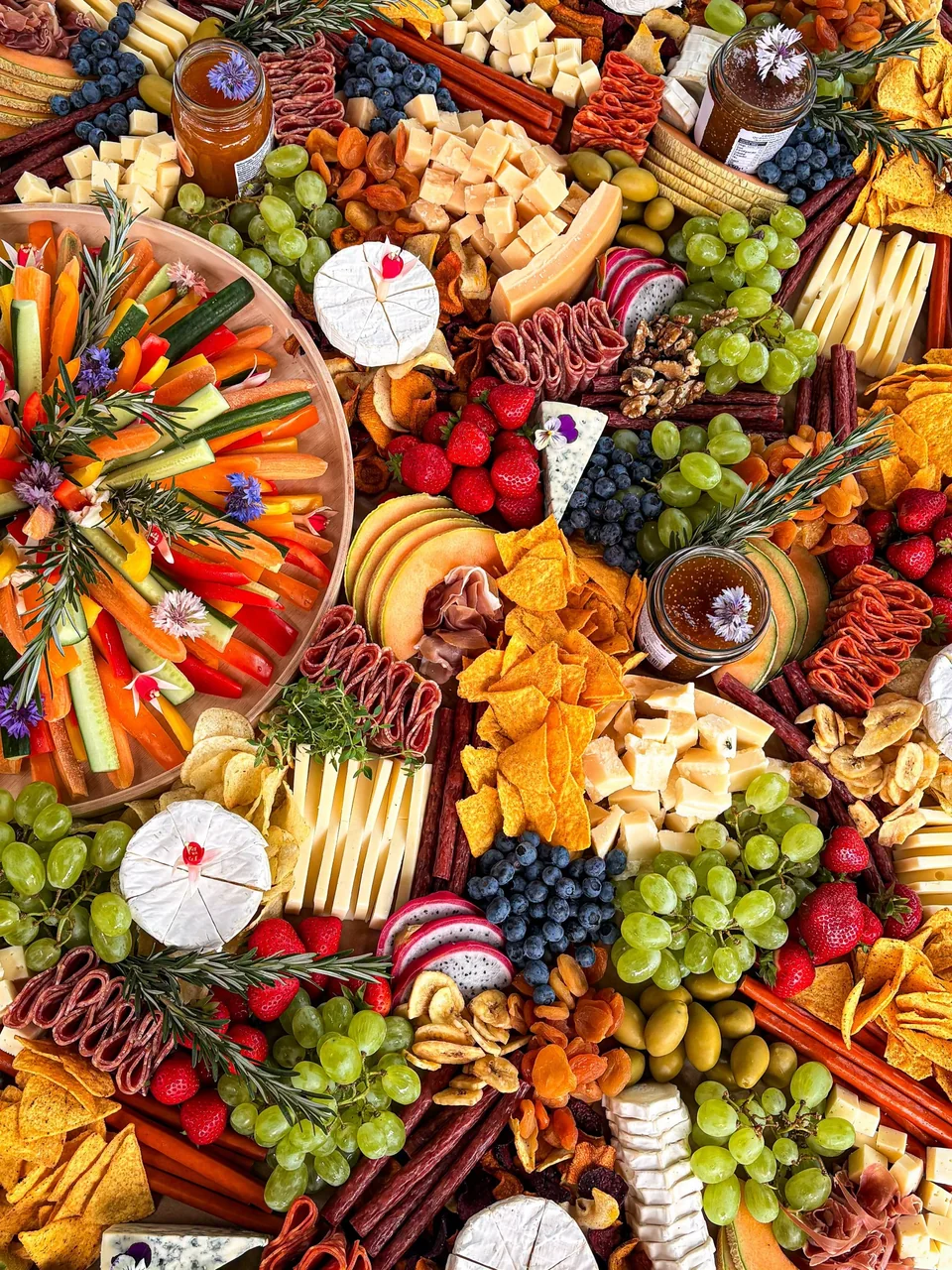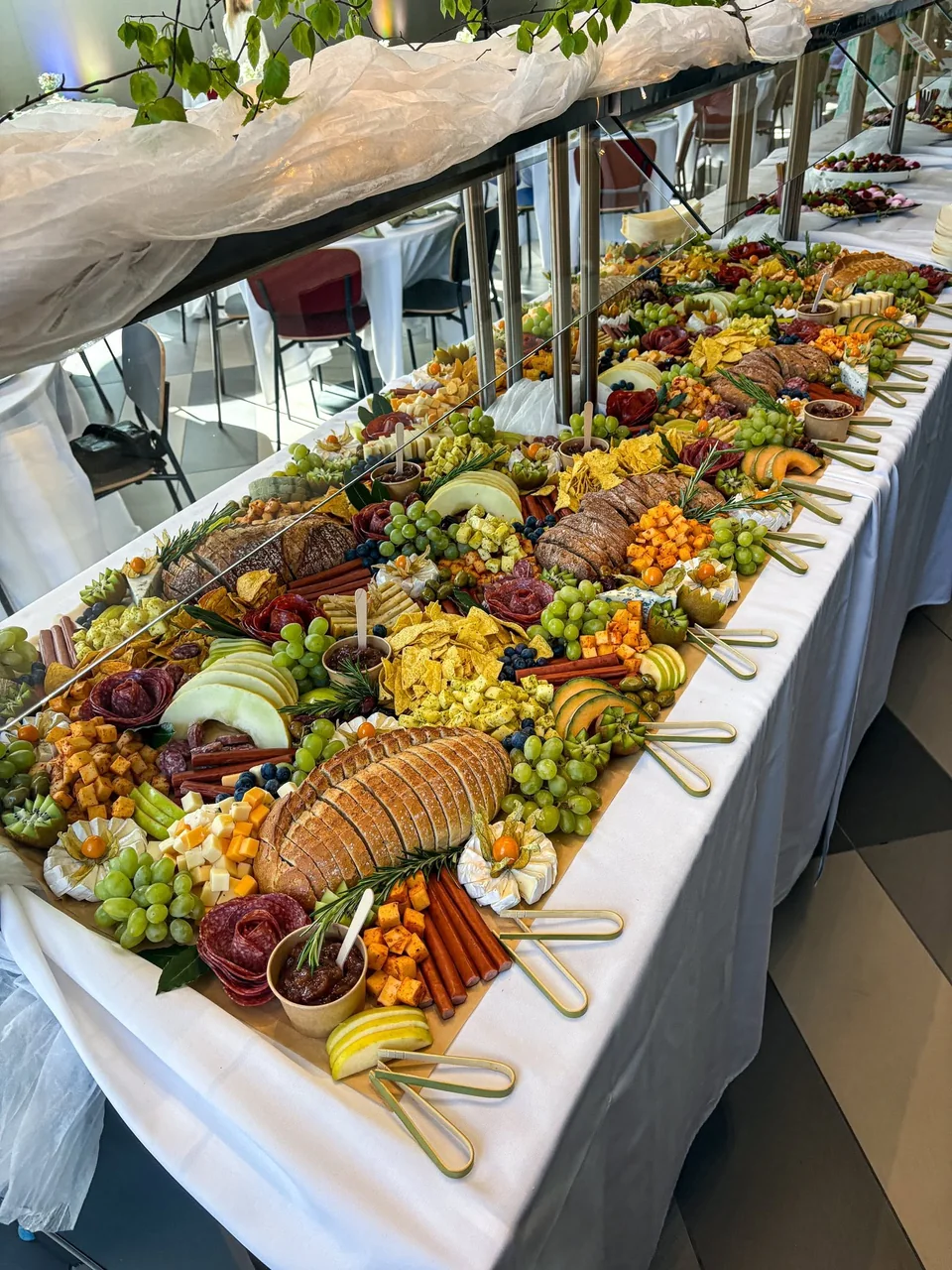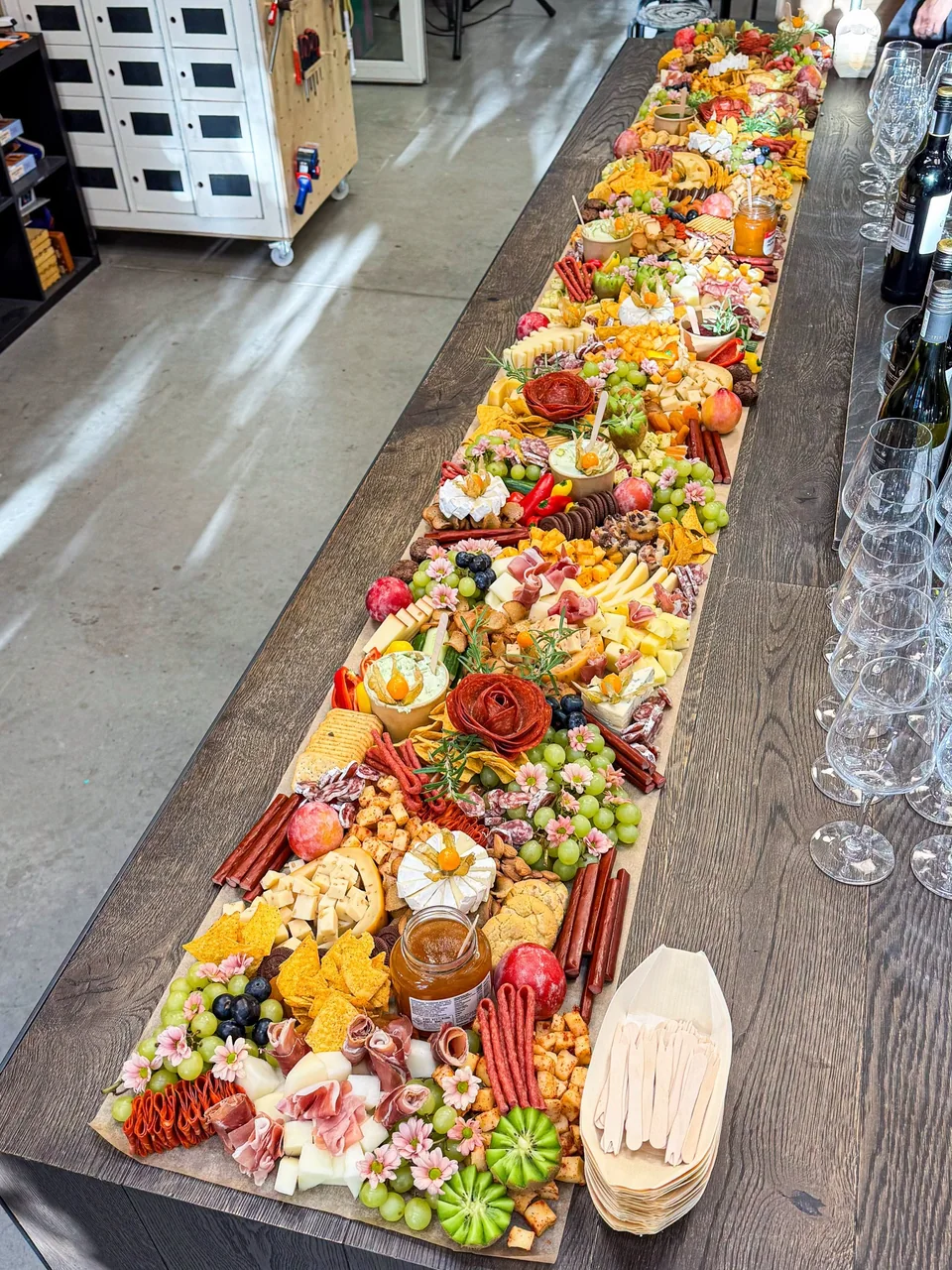
Charcuterie catering centers the event around arranged, self-directed food such as meats, cheeses, produce, accompaniments, and related grazing items. Traditional catering may include plated meals, buffets, hot entrées, servers, rentals, and a broader kitchen operation. Charcuterie catering is strongest when guests will mingle and presentation is part of the experience.
Side-by-side comparison
| Decision | First format | Alternative |
|---|---|---|
| Food format | Styled grazing display or boards | Plated, buffet, stations, hot and cold menus |
| Service | Often delivery and on-site styling | May include chefs, servers and rental coordination |
| Best fit | Cocktail hours, receptions, open houses | Conventional meal service |
| Key decision | Does grazing match the food role? | Does the caterer cover the full service requirement? |
The table is a decision aid, not a universal definition. Providers may use the same terms for different quantities, menus, delivery models, and staffing. Confirm the exact service before comparing proposals.
Planning sequence
Use the questions below in order. The answers create a service brief that a venue, host, planner, and food provider can all understand.
- Is a conventional meal required? Use accurate event wording so guests understand the food format. Do not use the category name as a substitute for confirming the included scope.
- Who provides staff and rentals? Confirm whether staffing, beverages, rentals, and cleanup are required from one vendor. This is where apparently similar proposals can describe materially different services.
- What food must remain hot? A charcuterie provider and traditional caterer can complement each other when scopes do not overlap. The stronger option is the one that matches guest behavior and the service requirement.
- Can the grazing display complement another caterer? Use accurate event wording so guests understand the food format. Do not use the category name as a substitute for confirming the included scope.
Planning a Minnesota event?
Pretty Arrangements prepares, delivers, and completely styles premium grazing tables on-site. Share the date, location, guest count, food role, and time guests arrive to request a custom proposal.
Explore the relevant serviceHow this applies in Minnesota
At a Minnesota venue, ask what the space already provides—such as tables, plates, napkins, beverages, or cleanup—before comparing food formats.
For an event at a venue, ask where we should enter, when the room is available, and where the table will be placed.
Common planning mistakes
- Choosing by terminology instead of included scope
- Assuming every provider defines the formats identically
- Ignoring staffing, tableware, temperature control, and cleanup
The practical fix is to write down the address, event type, guest count, table location, dietary requests, and the time guests arrive.
Questions to ask before booking
Is a conventional meal required?
Use accurate event wording so guests understand the food format. The stronger option is the one that matches guest behavior and the service requirement.
Who provides staff and rentals?
Confirm whether staffing, beverages, rentals, and cleanup are required from one vendor. Do not use the category name as a substitute for confirming the included scope.
What food must remain hot?
A charcuterie provider and traditional caterer can complement each other when scopes do not overlap. This is where apparently similar proposals can describe materially different services.
Can the grazing display complement another caterer?
Use accurate event wording so guests understand the food format. The stronger option is the one that matches guest behavior and the service requirement.