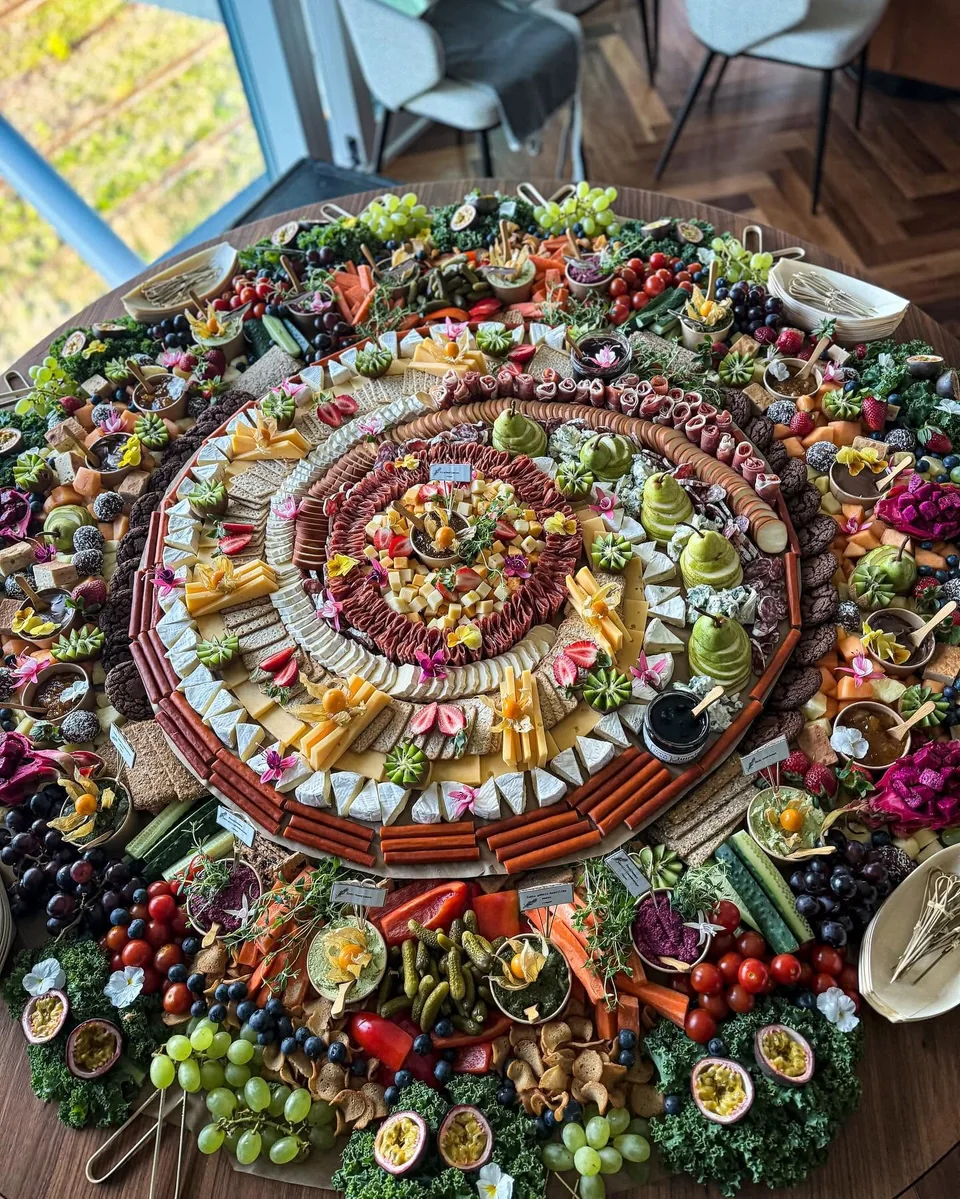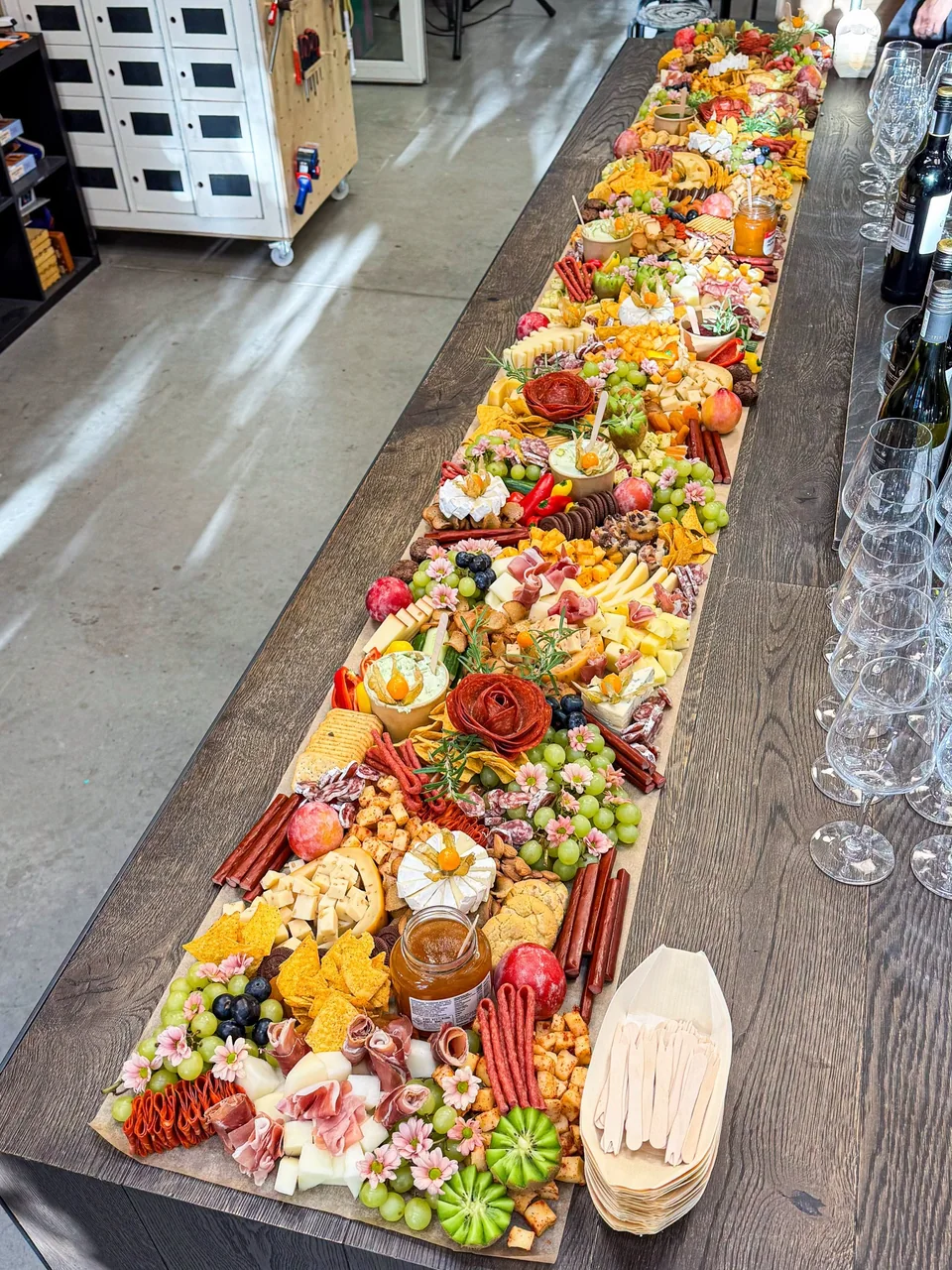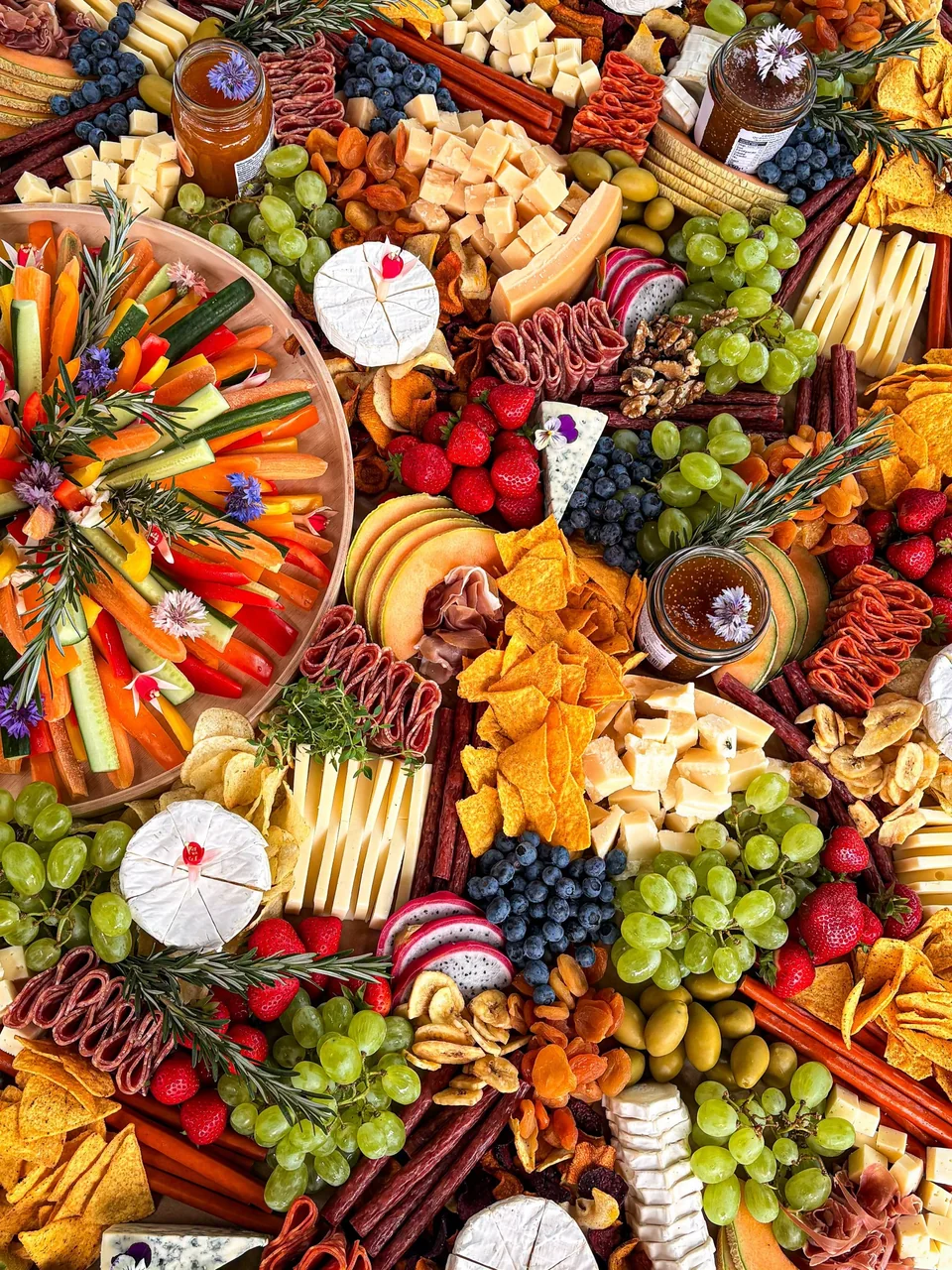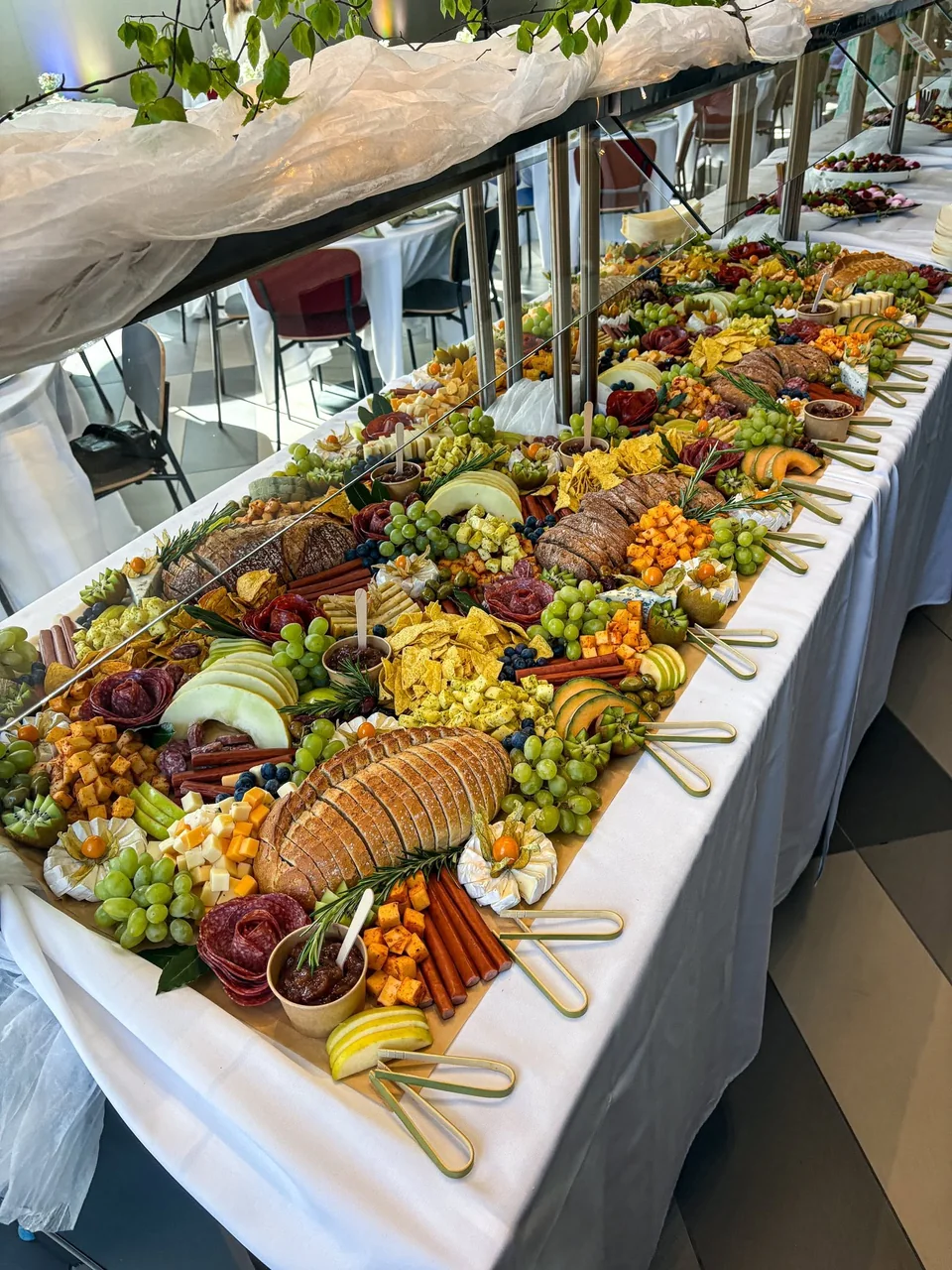
A grazing table is a visual, self-directed display best suited to mingling, cocktail-hour food, receptions, and selected substantial menus. A buffet is a broader service format that can hold hot and cold dishes and more readily function as a conventional meal. Neither is universally better; the right choice depends on menu expectations, seating, timing, service equipment, and guest flow.
Side-by-side comparison
| Decision | First format | Alternative |
|---|---|---|
| Primary strength | Visual, social, flexible grazing | Broad meal service |
| Typical menu | Charcuterie-style and complementary foods | Hot and cold entrées, sides and accompaniments |
| Guest behavior | Circulating and self-directed | More linear meal service |
| Choose when | Presentation and mingling matter | Guests expect a conventional meal |
The table is a decision aid, not a universal definition. Providers may use the same terms for different quantities, menus, delivery models, and staffing. Confirm the exact service before comparing proposals.
Planning sequence
Use the questions below in order. The answers create a service brief that a venue, host, planner, and food provider can all understand.
- Are guests expecting dinner? Match the format to the invitation and guest expectation. Do not use the category name as a substitute for confirming the included scope.
- Will hot entrées be served? Do not make a grazing table carry a full-meal promise without an appropriate menu and quantity. This is where apparently similar proposals can describe materially different services.
- Is the event seated or circulating? Consider seating, plates, utensils, temperature control, and service duration. The stronger option is the one that matches guest behavior and the service requirement.
- How long must food remain available? Match the format to the invitation and guest expectation. Do not use the category name as a substitute for confirming the included scope.
Planning a Minnesota event?
Pretty Arrangements prepares, delivers, and completely styles premium grazing tables on-site. Share the date, location, guest count, food role, and time guests arrive to request a custom proposal.
Explore the relevant serviceHow this applies in Minnesota
At a Minnesota venue, ask what the space already provides—such as tables, plates, napkins, beverages, or cleanup—before comparing food formats.
For an event at a venue, ask where we should enter, when the room is available, and where the table will be placed.
Common planning mistakes
- Choosing by terminology instead of included scope
- Assuming every provider defines the formats identically
- Ignoring staffing, tableware, temperature control, and cleanup
The practical fix is to write down the address, event type, guest count, table location, dietary requests, and the time guests arrive.
Questions to ask before booking
Are guests expecting dinner?
Match the format to the invitation and guest expectation. The stronger option is the one that matches guest behavior and the service requirement.
Will hot entrées be served?
Do not make a grazing table carry a full-meal promise without an appropriate menu and quantity. Do not use the category name as a substitute for confirming the included scope.
Is the event seated or circulating?
Consider seating, plates, utensils, temperature control, and service duration. This is where apparently similar proposals can describe materially different services.
How long must food remain available?
Match the format to the invitation and guest expectation. The stronger option is the one that matches guest behavior and the service requirement.