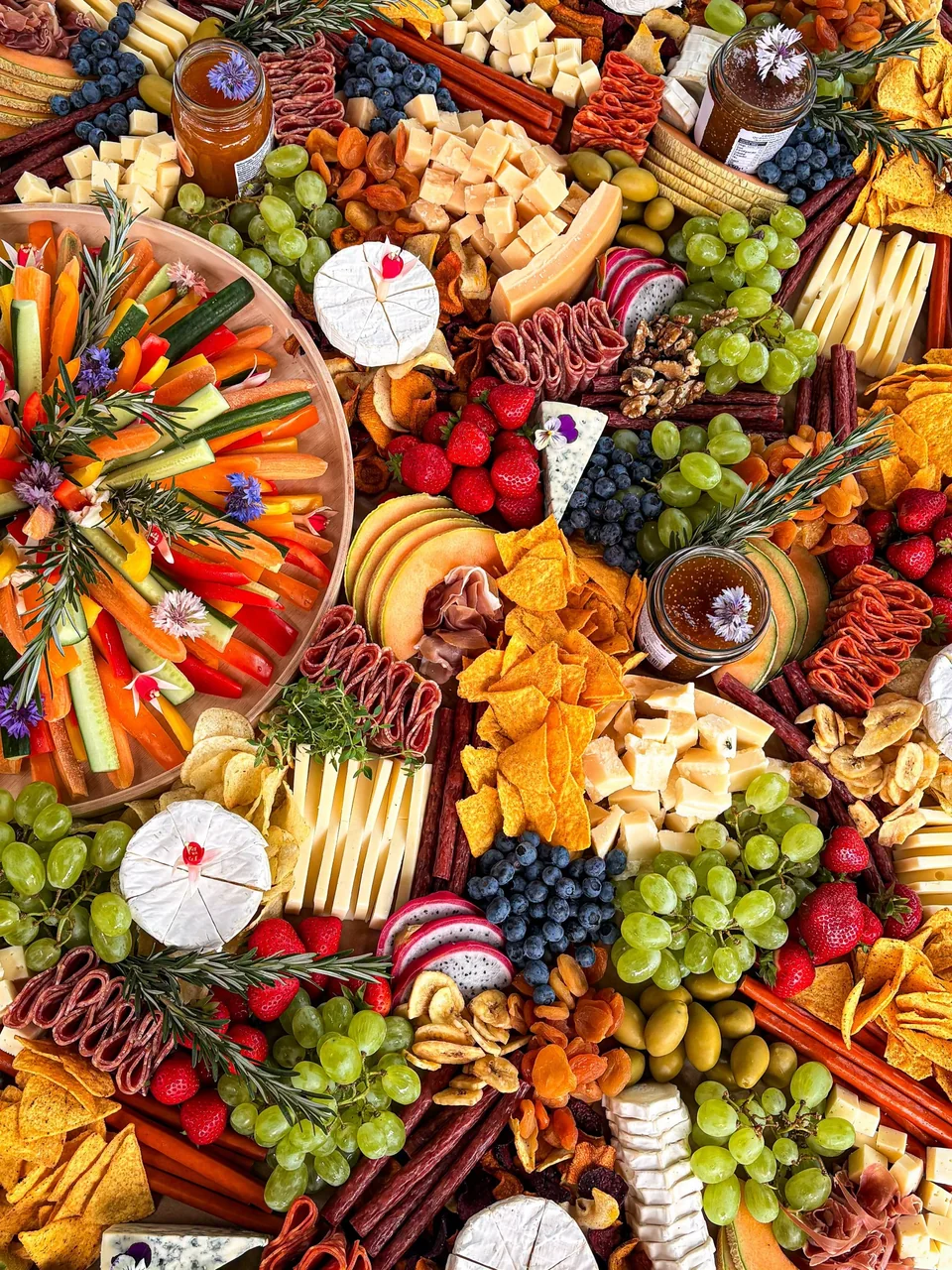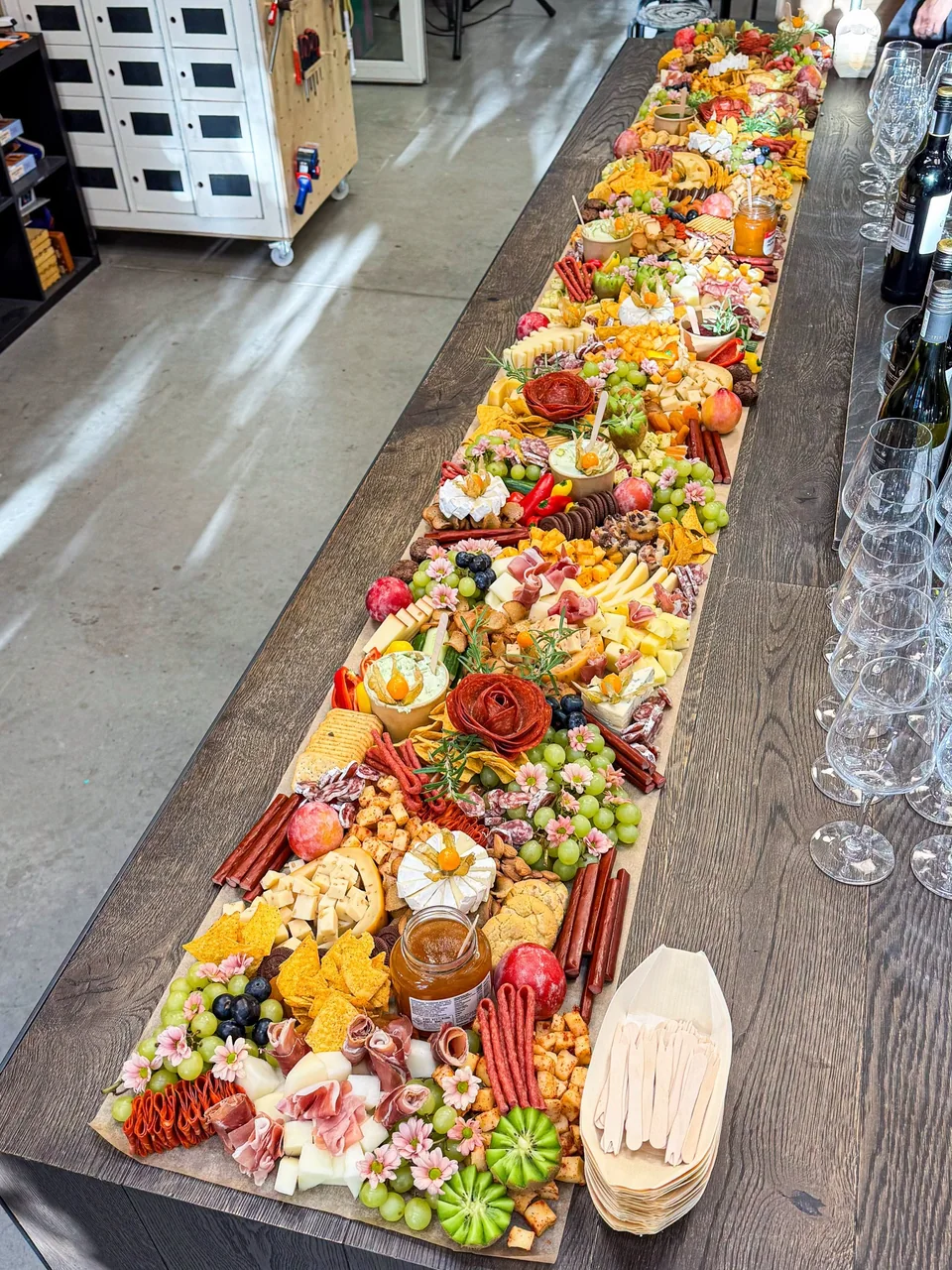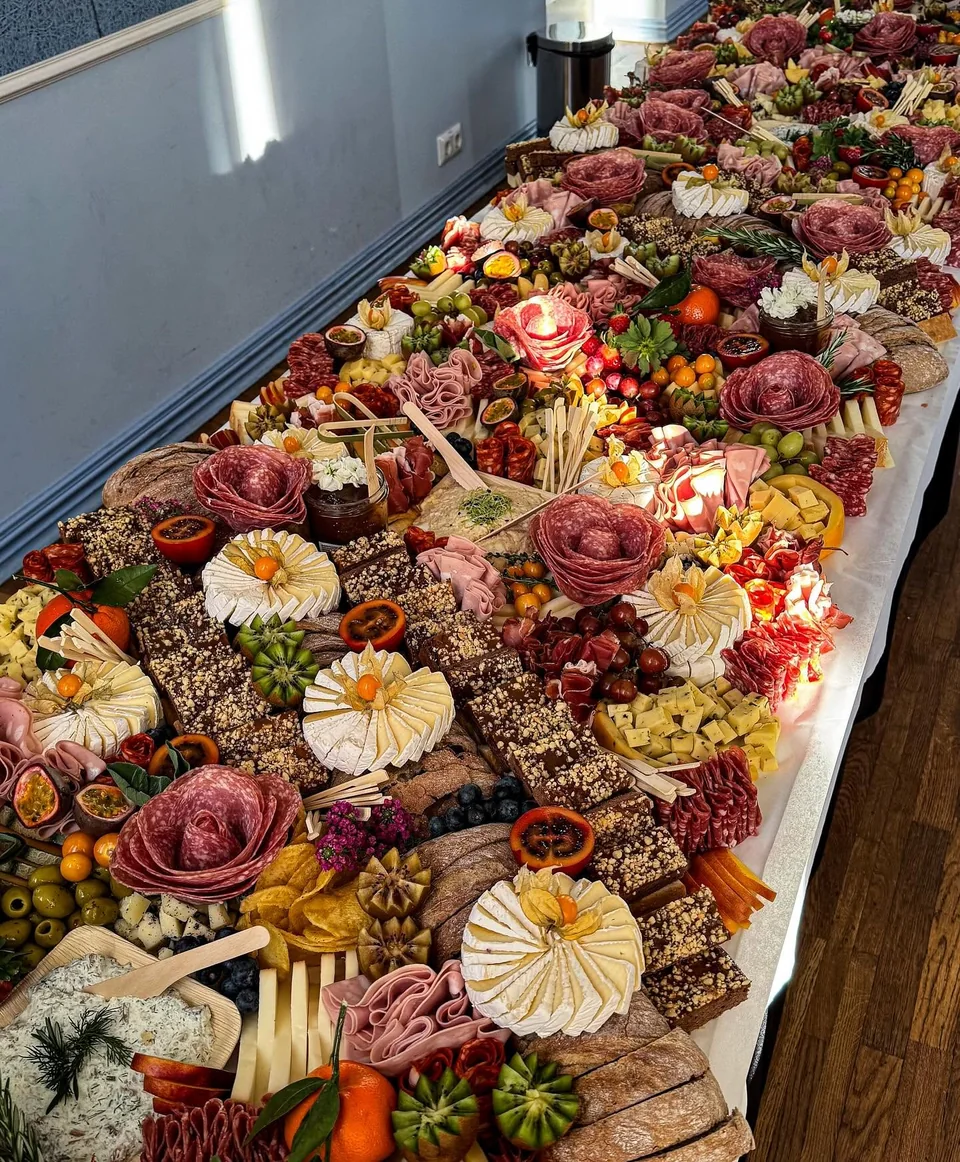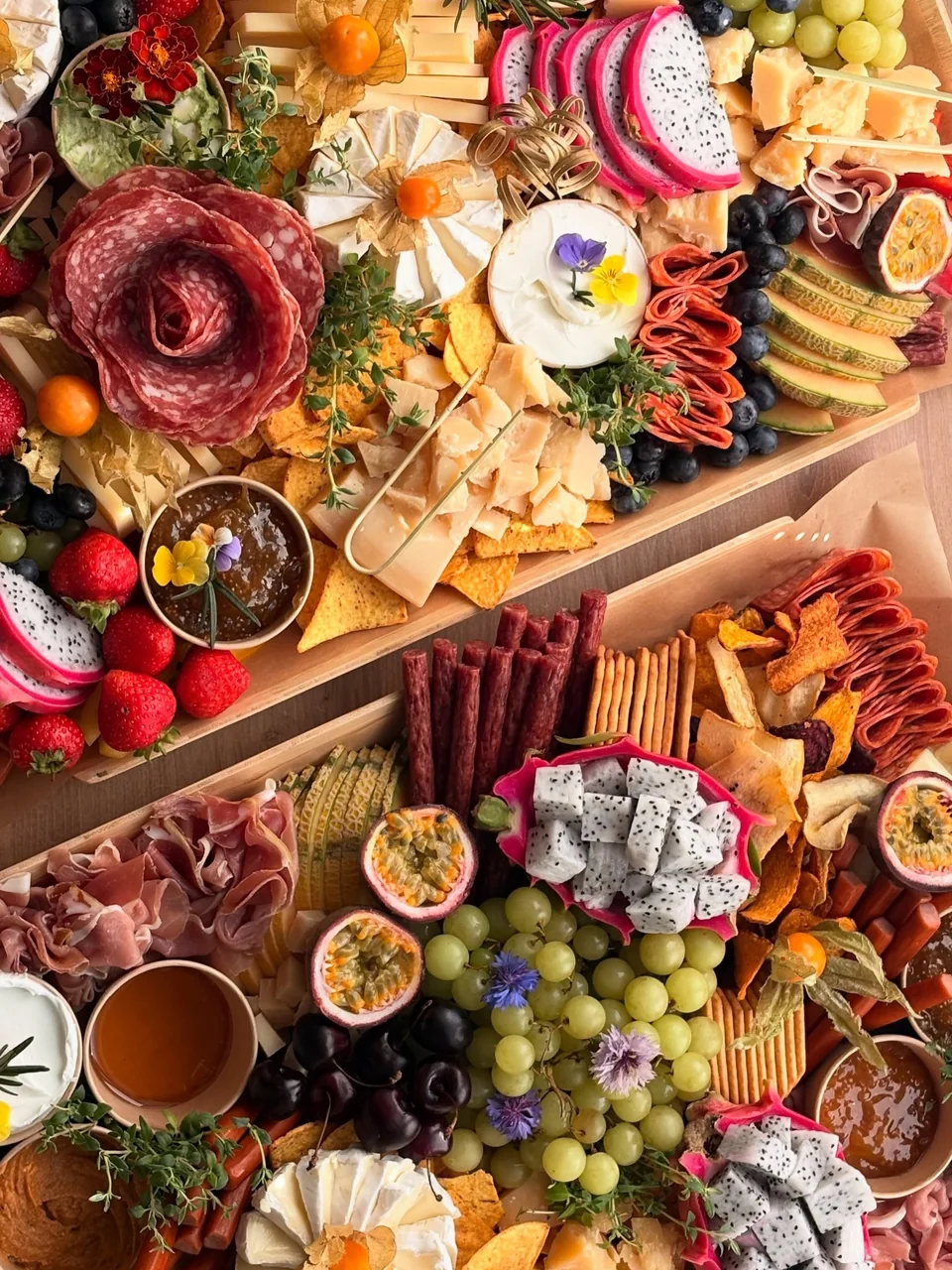
The names are sometimes used loosely, which can make comparing options more confusing than it needs to be. A charcuterie board is generally a contained, portable presentation. A grazing table is built across a larger surface and becomes part of the event environment.
The practical definitions
Charcuterie board
A board is arranged on a defined serving piece or contained surface. It is usually easier to carry, position, and serve for smaller gatherings. The presentation remains visually complete because the board itself establishes its boundary.
Grazing table
A grazing table uses the table or counter as the presentation surface. Food, serving pieces, elevation, and styling work together across a broader area. Because it is created for a particular location, delivery timing, venue access, and on-site setup become more important.
Neither format is automatically better. They solve different event needs.
Where a “grazing board” fits
“Grazing board” usually describes a board with a broad mix of foods rather than only traditional charcuterie, but providers use the term differently. In practical event planning, it is still a contained presentation unless the provider says it will be installed across the venue’s table or counter.
Do not choose from the label alone. Ask for the serving surface, finished dimensions, delivery or setup method, intended number of guests, and what happens when the provider leaves. Those facts distinguish a portable board from an on-site grazing-table installation.
How the two formats compare
| Consideration | Charcuterie board | Grazing table |
|---|---|---|
| Scale | Contained and portable | Built across a larger event surface |
| Setup | Often arrives substantially arranged | Typically requires on-site styling |
| Visual role | Food presentation within the event | Food presentation and room focal point |
| Guest flow | Best when a smaller group can approach comfortably | Can be planned around broader access and larger guest movement |
| Planning needs | Guest count, timing, delivery, and placement | All of those, plus surface, access, setup window, and venue coordination |
When a charcuterie board makes sense
A board can be a strong fit for a smaller gathering, a meeting table, a gift, a private celebration, or an event that needs a self-contained presentation. It can also work when the venue has limited setup time or the host already has a suitable place for the board.
The key is to avoid assuming that “board” means a miniature grazing table for any number of guests. A board still needs to match the group, timing, and amount of other food. It also needs enough clear space around it for guests to serve themselves without blocking a doorway or work area.
When a grazing table makes sense
A grazing table is useful when the presentation should feel integrated into the room and serve a larger or more socially fluid gathering. Weddings, client receptions, employee events, grand openings, and milestone celebrations can all benefit when the table acts as both food and a visual gathering point.
Because the arrangement is styled on-site, it can respond to the available surface and the way guests will approach it. That also means the event brief must include the location, setup access, guest-ready time, and any venue requirements.
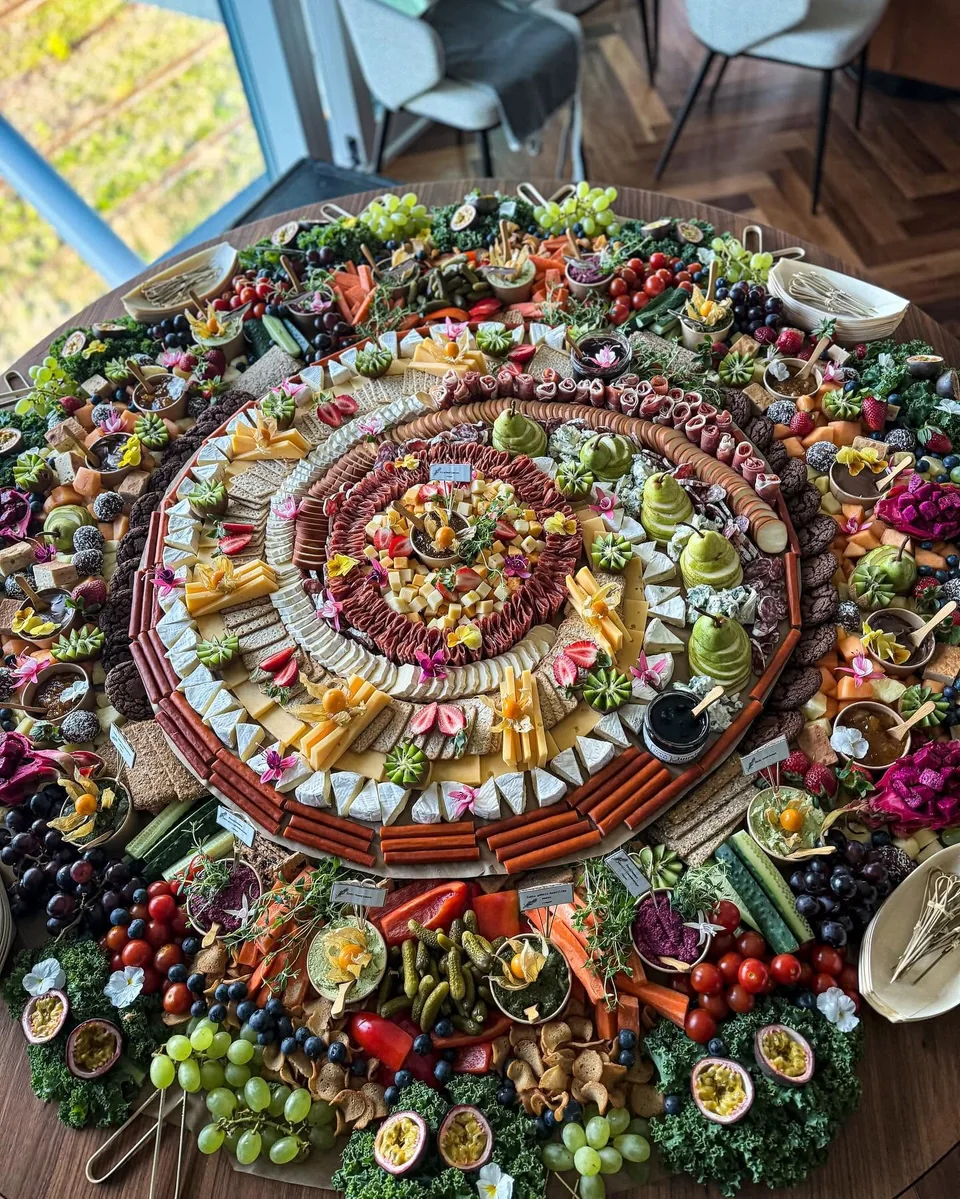
The distinction is not only about food quantity. A grazing table involves more event logistics because the presentation is completed in the space where guests will experience it.
Questions to ask before choosing
- How many people are expected, and will they approach at once?
- Is this a light welcome, cocktail-hour food, part of a larger menu, or the primary grazing experience?
- Should the presentation act as a visual feature in the room?
- What surface and surrounding space are available?
- How much setup access does the venue allow?
- Does the venue permit an independent outside food vendor?
- Who will receive the delivery or coordinate the on-site setup?
Those answers usually make the right format much clearer than the labels alone.
The simplest distinction
Choose a charcuterie board when you need a contained, portable presentation. Choose a grazing table when the food should be styled across a larger surface and become part of the event itself. Then refine the decision using timing, headcount, other food, access, and guest flow.