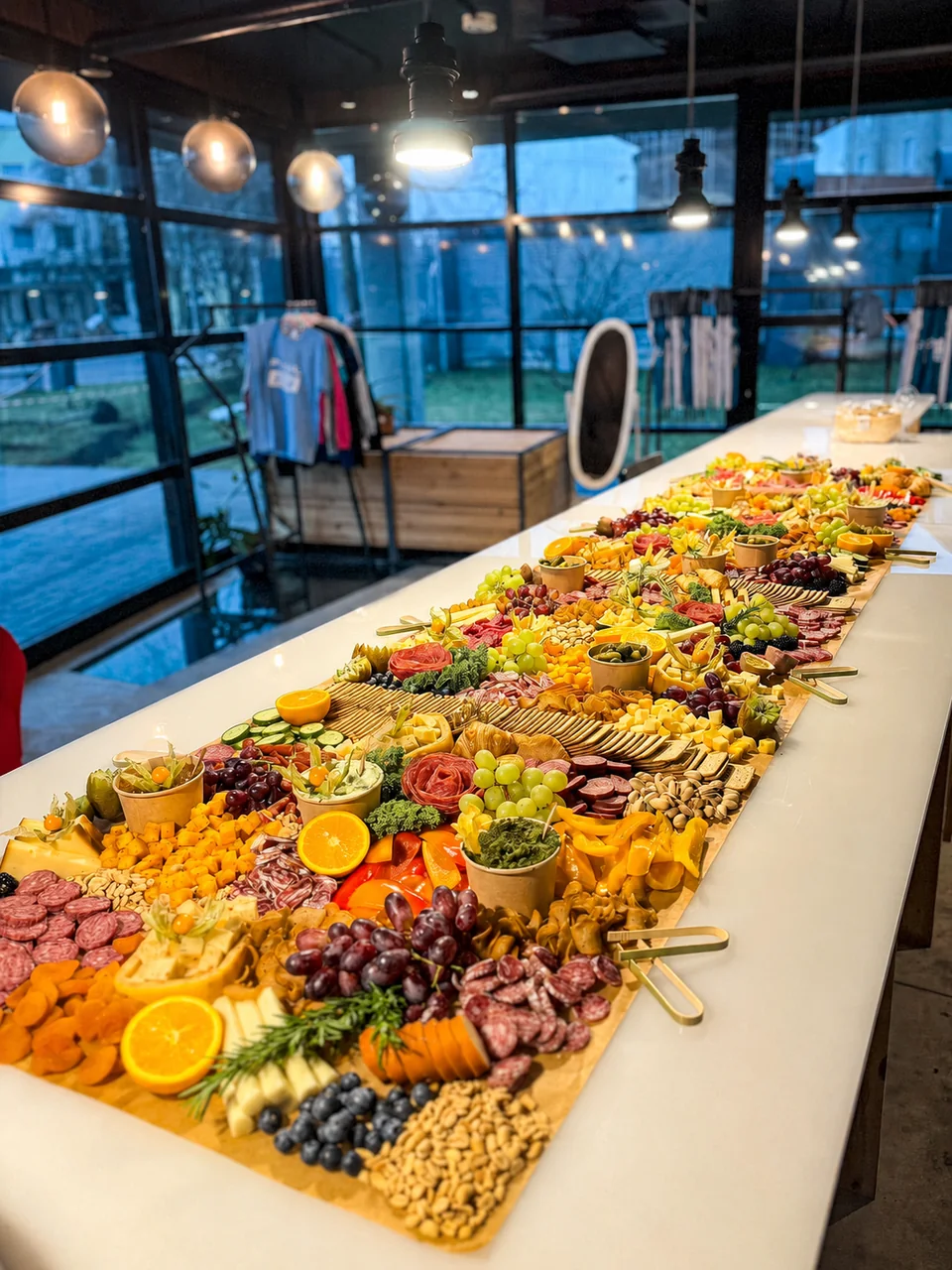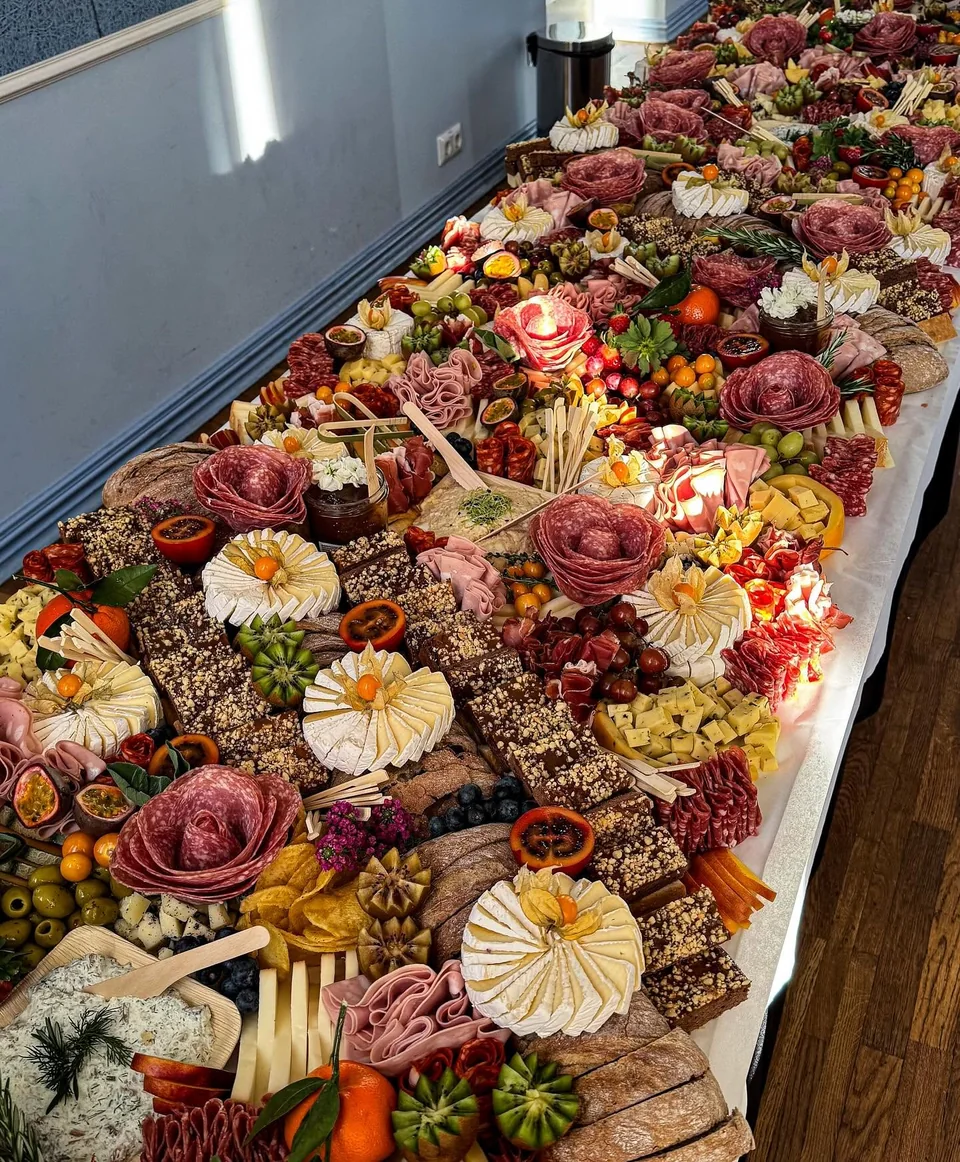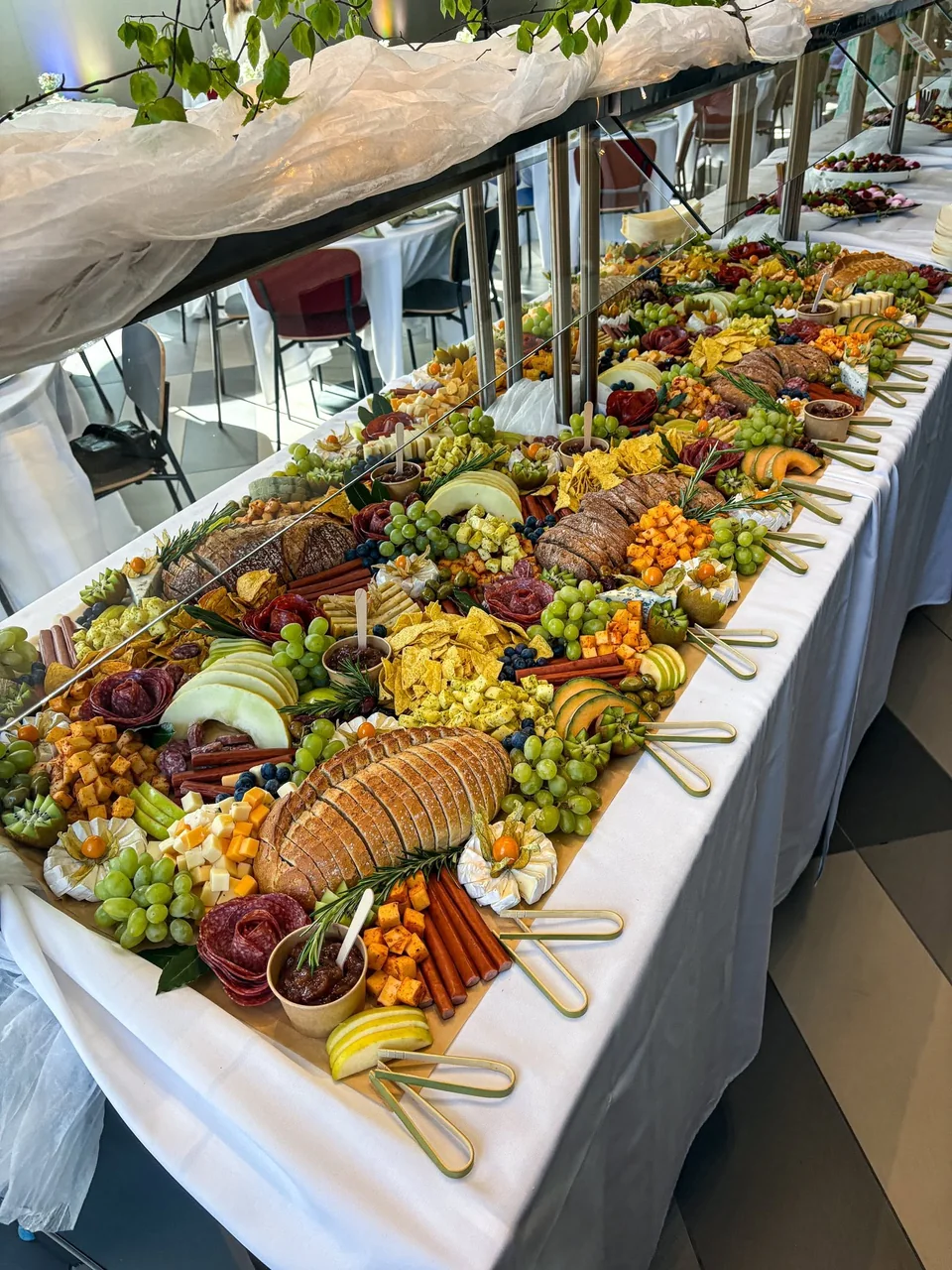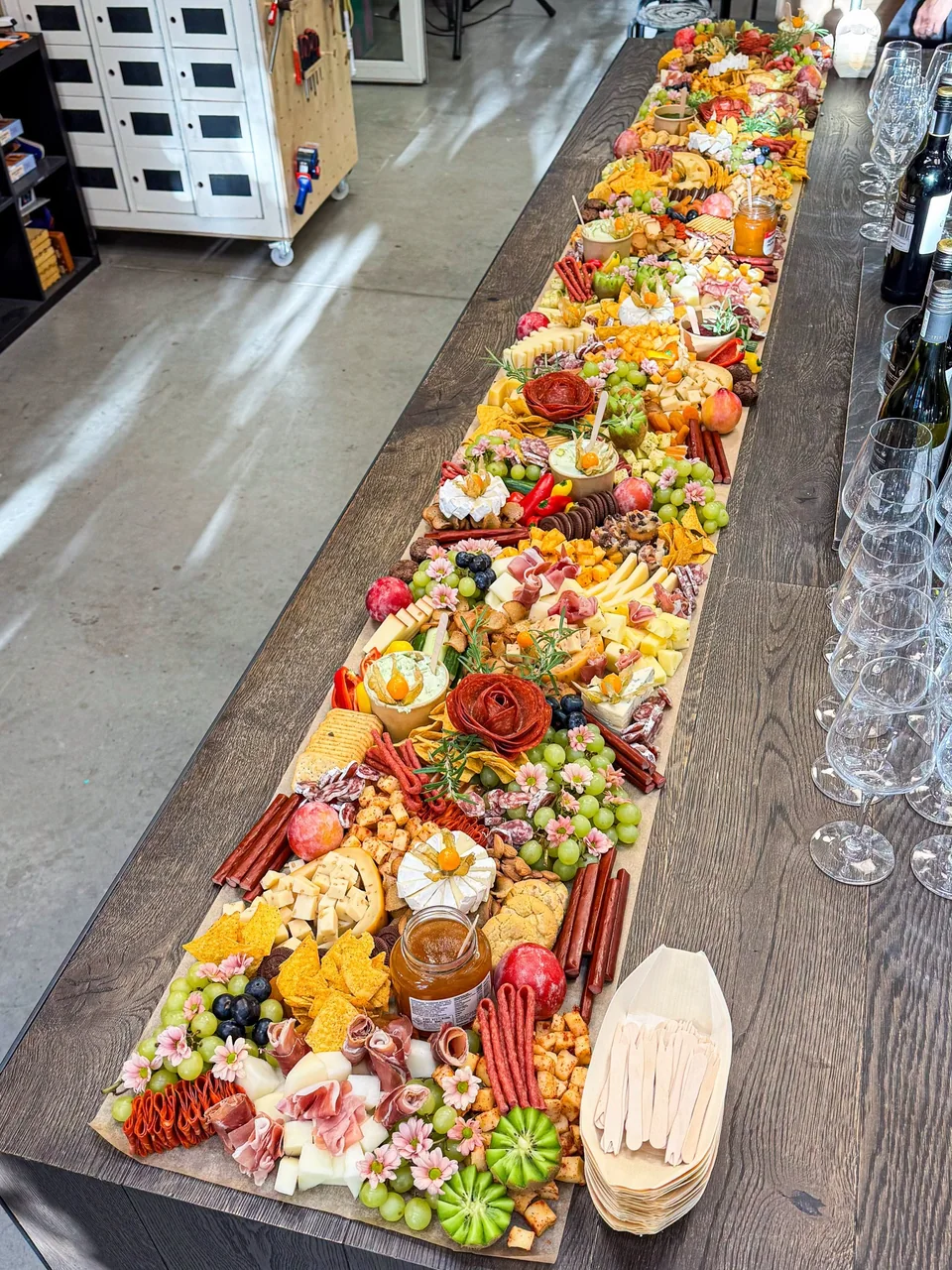
The best corporate-event food format follows the room and agenda. Grazing tables work well for receptions, employee appreciation, open houses, recruiting events, and networking because guests can eat while moving. Meetings or formal programs may need boxed, plated, or buffet service instead. Start with timing, guest flow, dietary needs, and building access.
What matters most
Match the food format to whether guests are seated, circulating, or arriving in waves
Match the food format to whether guests are seated, circulating, or arriving in waves. Assign one internal contact to confirm it rather than leaving the provider to locate the right person on arrival.
Identify the building contact, loading entrance, suite, elevator, and security process
Identify the building contact, loading entrance, suite, elevator, and security process. This keeps the food plan from competing with registration, presentations, or normal office traffic.
Avoid placing food where it competes with registration, presentation screens, or the bar
Avoid placing food where it competes with registration, presentation screens, or the bar. Document the answer with the building or venue contact before event day.
Give employees a clear way to identify dietary options
Give employees a clear way to identify dietary options. Assign one internal contact to confirm it rather than leaving the provider to locate the right person on arrival.
Use one person to approve the guest count, room, and time guests arrive
Use one person to approve the guest count, room, and time guests arrive. This keeps the food plan from competing with registration, presentations, or normal office traffic.
Planning sequence
Use the questions below in order. The answers create a service brief that a venue, host, planner, and food provider can all understand.
- What should guests be doing while they eat? Match the food format to whether guests are seated, circulating, or arriving in waves. This keeps the food plan from competing with registration, presentations, or normal office traffic.
- Does the building require vendor check-in? Identify the building contact, loading entrance, suite, elevator, and security process. Document the answer with the building or venue contact before event day.
- What is the final head count process? Avoid placing food where it competes with registration, presentation screens, or the bar. Assign one internal contact to confirm it rather than leaving the provider to locate the right person on arrival.
- Who owns room setup? Give employees a clear way to identify dietary options. This keeps the food plan from competing with registration, presentations, or normal office traffic.
Planning a Minnesota event?
Pretty Arrangements prepares, delivers, and completely styles premium grazing tables on-site. Share the date, location, guest count, food role, and time guests arrive to request a custom proposal.
Explore the relevant serviceHow this applies in Minnesota
Twin Cities offices and hotels may have separate loading entrances, elevators, security desks, and event rooms. Include the building contact and exact room with the event details.
For an event at a venue, ask where we should enter, when the room is available, and where the table will be placed.
If candidates are the primary audience, the recruiting-event food guide maps hospitality to arrival, conversation, tours, and interviews.
Common planning mistakes
- Providing only the public building address
- Placing food beside registration or the main presentation path
- Leaving access and room ownership to a busy event host
The practical fix is to write down the address, event type, guest count, table location, dietary requests, and the time guests arrive.
Questions to ask before booking
What should guests be doing while they eat?
Match the food format to whether guests are seated, circulating, or arriving in waves. Assign one internal contact to confirm it rather than leaving the provider to locate the right person on arrival.
Does the building require vendor check-in?
Identify the building contact, loading entrance, suite, elevator, and security process. This keeps the food plan from competing with registration, presentations, or normal office traffic.
What is the final head count process?
Avoid placing food where it competes with registration, presentation screens, or the bar. Document the answer with the building or venue contact before event day.
Who owns room setup?
Give employees a clear way to identify dietary options. Assign one internal contact to confirm it rather than leaving the provider to locate the right person on arrival.