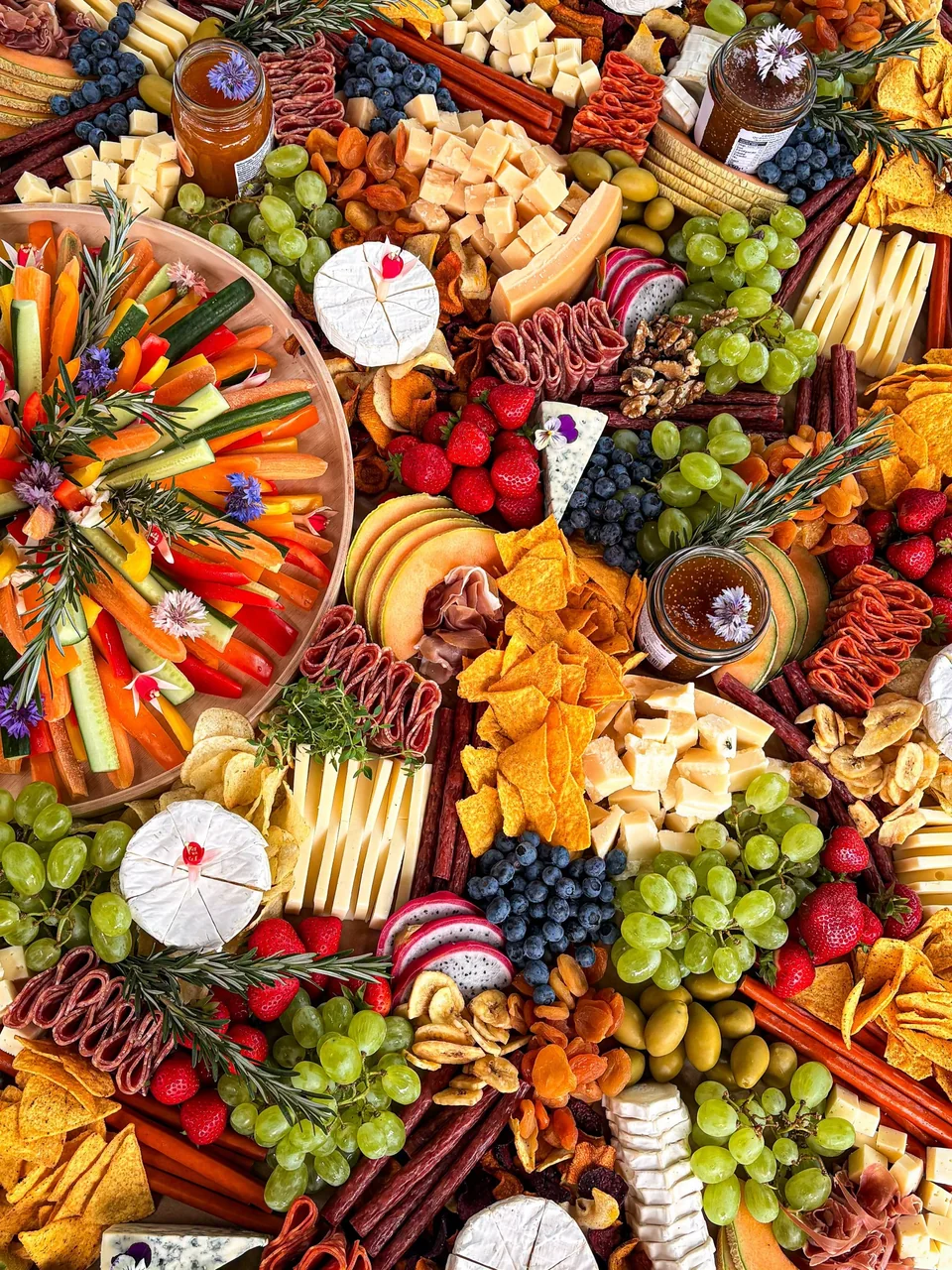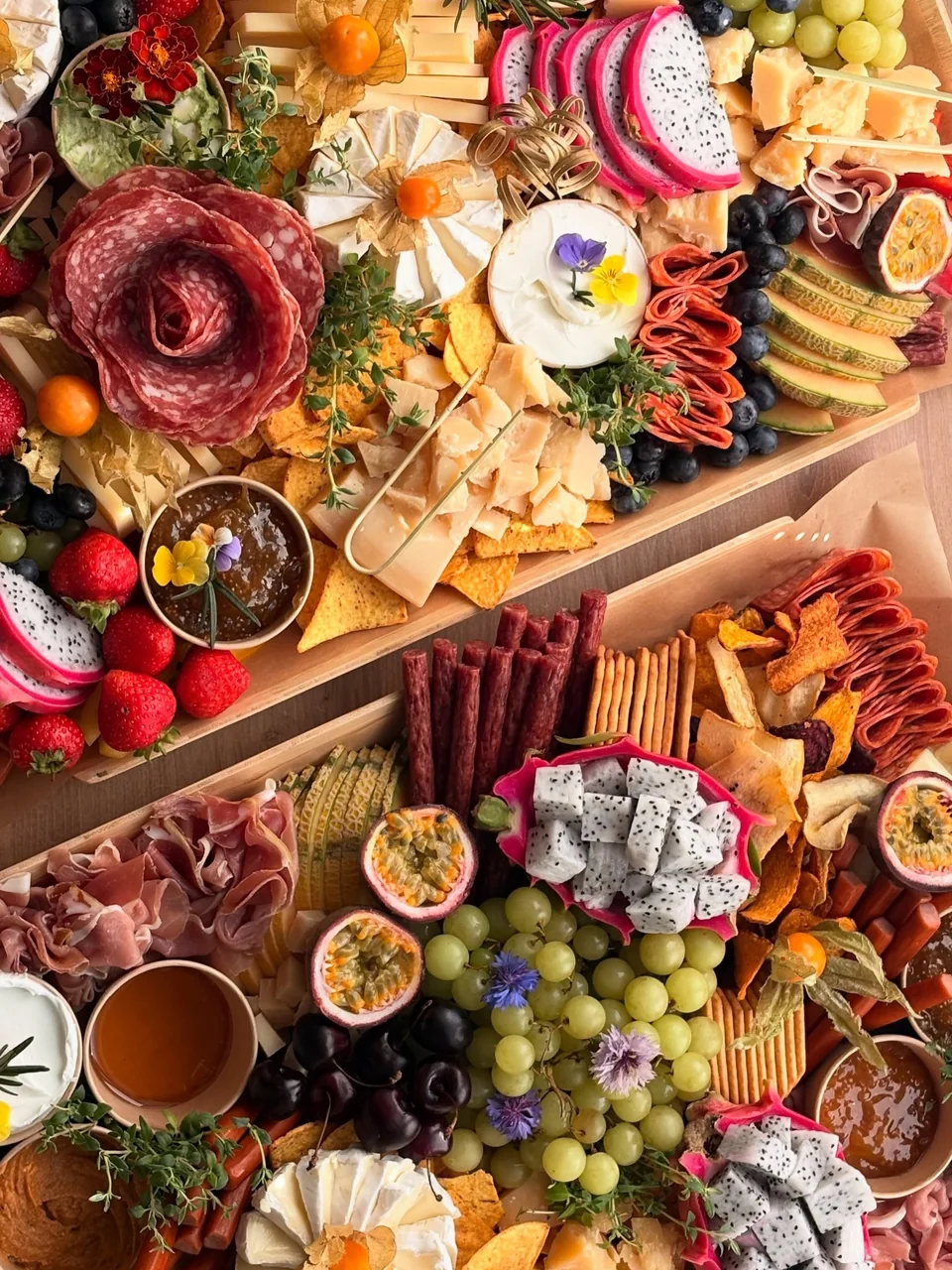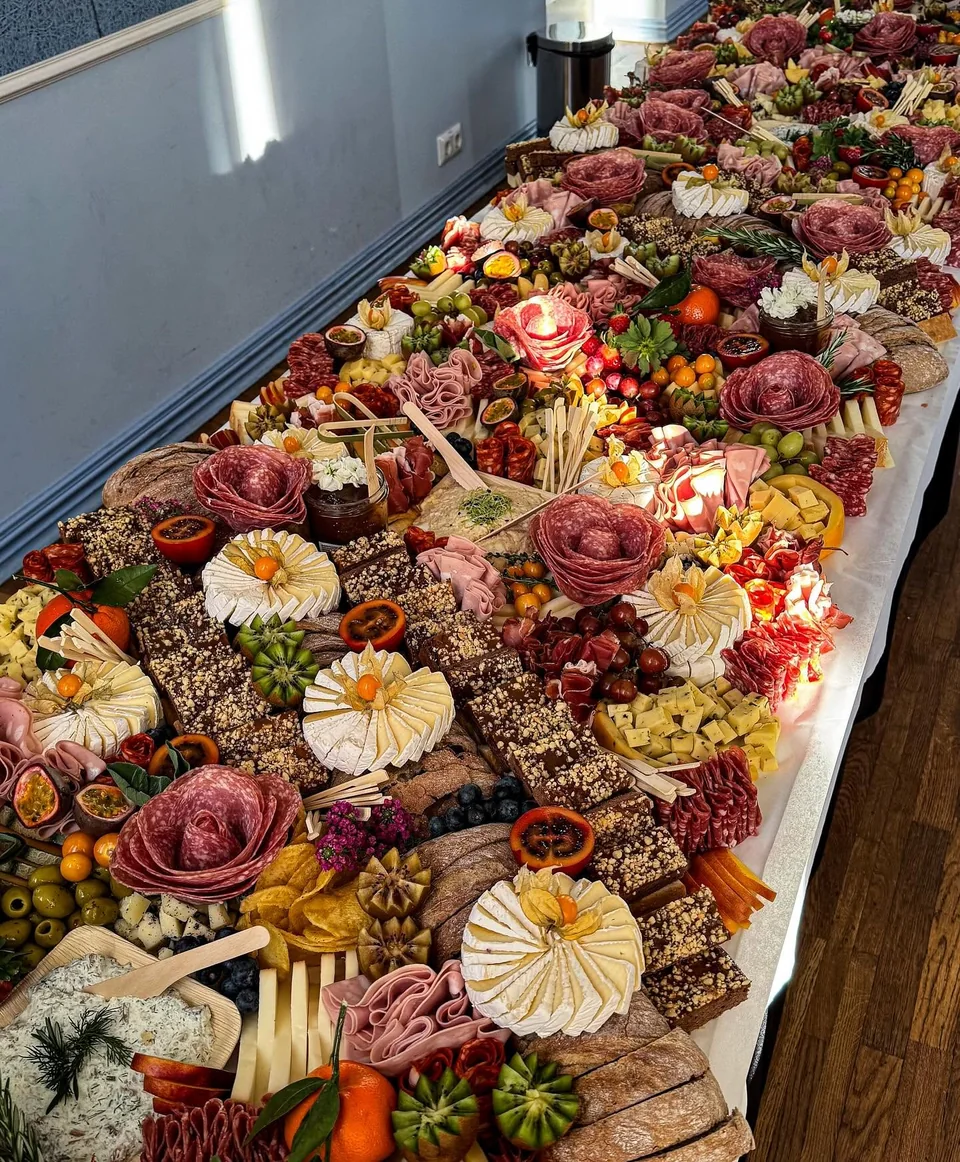
Corporate food does not always need to feel like a formal meal. For gatherings built around conversation, recognition, or arrival, a grazing table can offer a more flexible experience—especially when preparation, delivery, and on-site styling are handled for the team.
1. Employee appreciation events
A grazing table can make a familiar office or venue feel distinctly celebratory without requiring a tightly scheduled meal. It works particularly well when employees arrive over a window of time, mingle across teams, or need to return to work afterward.
Clarify whether the table is a light afternoon feature, part of a broader lunch, or the main food. Share shift patterns or staggered attendance so the setup reflects how people will actually participate.
2. Client receptions
Client events need hospitality that feels considered but does not pull attention away from conversation. A styled table creates a clear welcome and gives guests an easy reason to move through the room.
Position it away from registration bottlenecks and presentation equipment. If the reception follows a meeting, decide whether the table should be visible during the program or revealed afterward.
3. Grand openings
Openings often have uncertain arrival patterns. People may come directly from work, stay for different lengths of time, and move between demonstrations, tours, or speeches. A grazing format can accommodate that rhythm more naturally than a single meal service.
Foot traffic deserves extra attention. Do not place the table where it blocks the entrance, ribbon-cutting area, product display, or the route used for tours.
4. Holiday parties
A grazing table can serve as the visual center of a holiday gathering, particularly during the opening portion of the event. It can also complement a bar, dessert station, or later meal when each element has a clear role.
Book early when the date matters. Confirm building access outside ordinary office hours and identify who can receive the provider if the internal event team is still preparing the room.
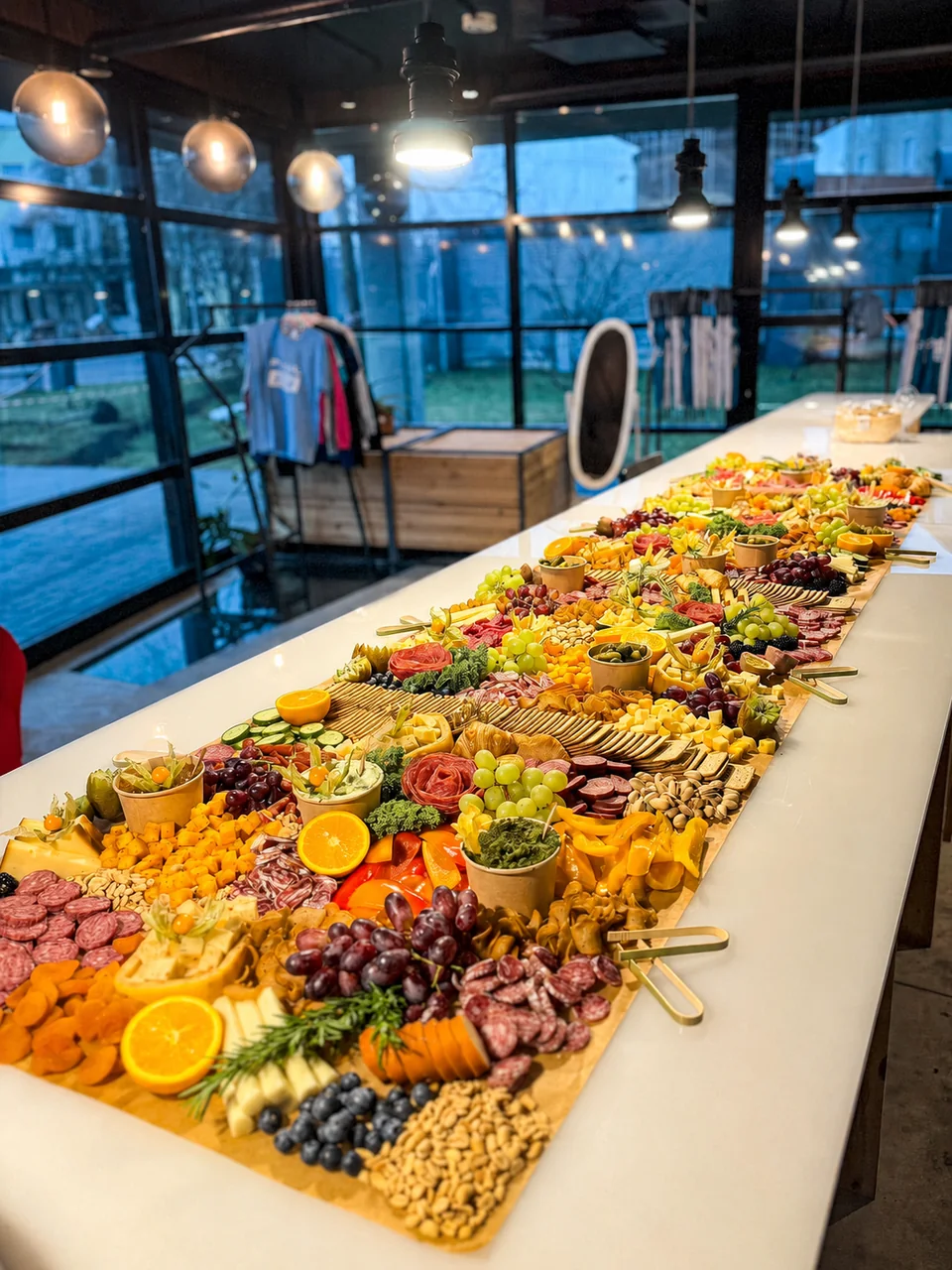
5. Company milestones
Anniversaries, launches, funding milestones, and project completions often sit between a meeting and a party. A guest-ready table can mark the occasion without demanding that everyone stop for a formal service.
Tell the provider whether executives will speak, whether photography is planned, and when the table should open. This prevents setup from overlapping with the moment being celebrated.
6. Board and leadership gatherings
For leadership meetings, the presentation should be polished and operationally quiet. A contained arrangement or appropriately sized table can work during an arrival period, break, or post-meeting conversation.
Access and timing matter more than spectacle. Confirm whether the room is in use beforehand, whether security controls entry, and who can approve the final placement.
7. Recruiting events and conference hospitality
Recruiting events benefit from an environment that encourages people to linger and speak naturally. Conference hospitality needs to work around programmed sessions and waves of traffic. In both cases, food can support connection without becoming a separate activity guests must schedule around.
Estimate when the largest wave will arrive, identify competing food options, and make the table visible without placing it in a traffic choke point.
Grazing tables are not a universal replacement for catering. They are best when a charcuterie-style, self-guided presentation fits the purpose and service expectations of the gathering.
What every corporate brief should include
- Date, location, and event type
- Expected guest count and arrival pattern
- Guest-ready time and event duration
- The role of the grazing table
- Other food and beverages being served
- Known dietary needs
- Building access, parking, security, and elevator details
- One on-site contact with decision authority
Choose the format around the gathering
The common thread across these events is flexibility. Guests can approach naturally, the table can become part of the room, and the internal team does not need to coordinate food pickup or styling. The better the event brief, the more precisely the presentation can support the experience.