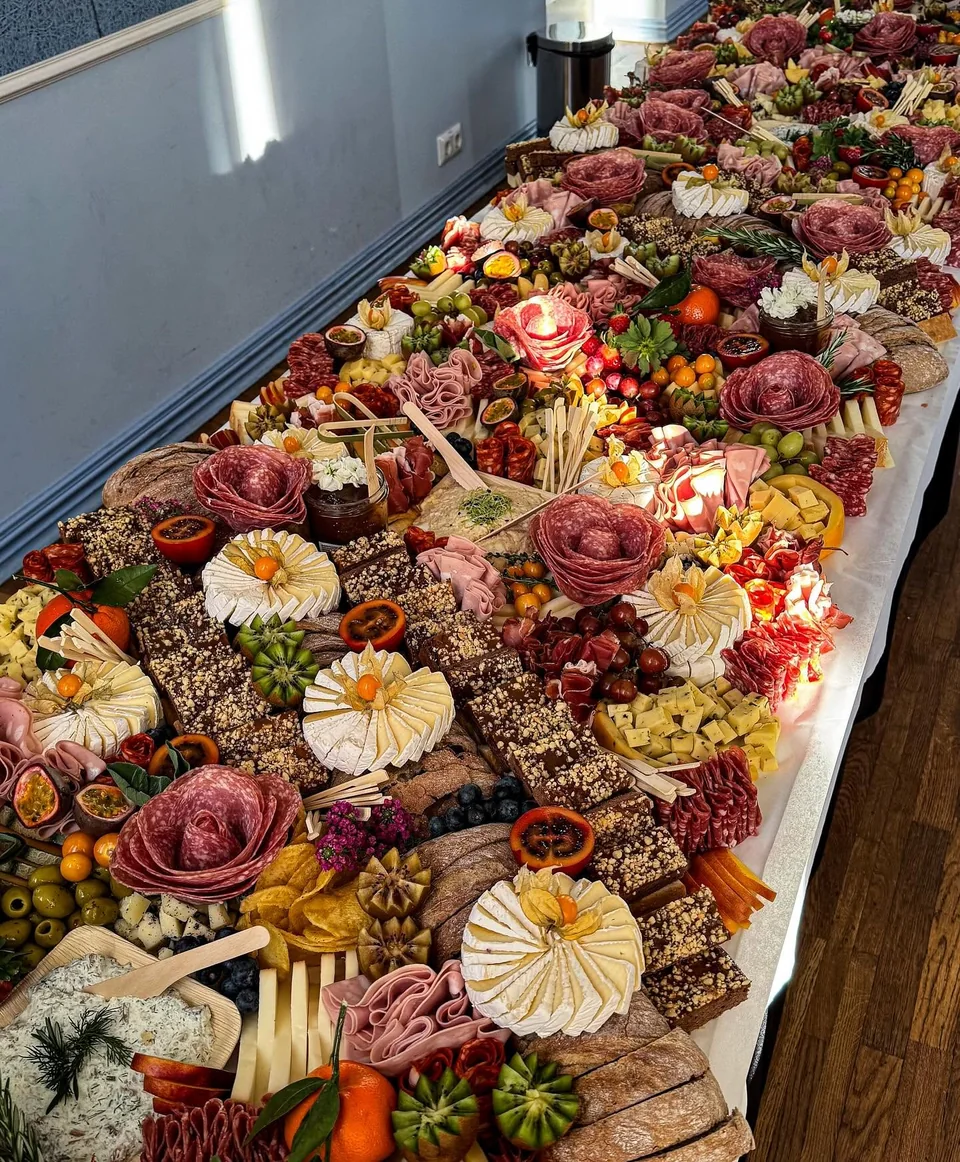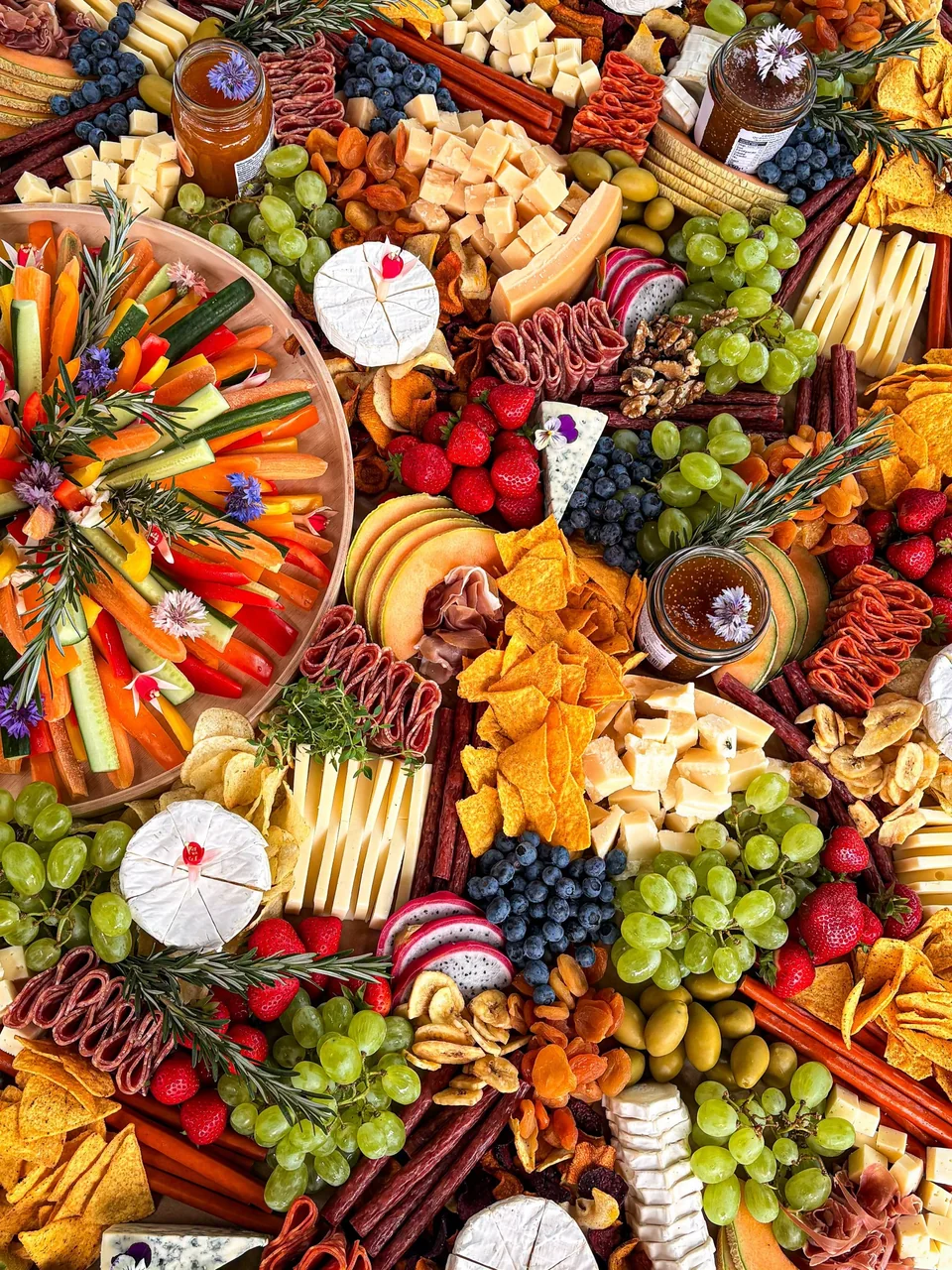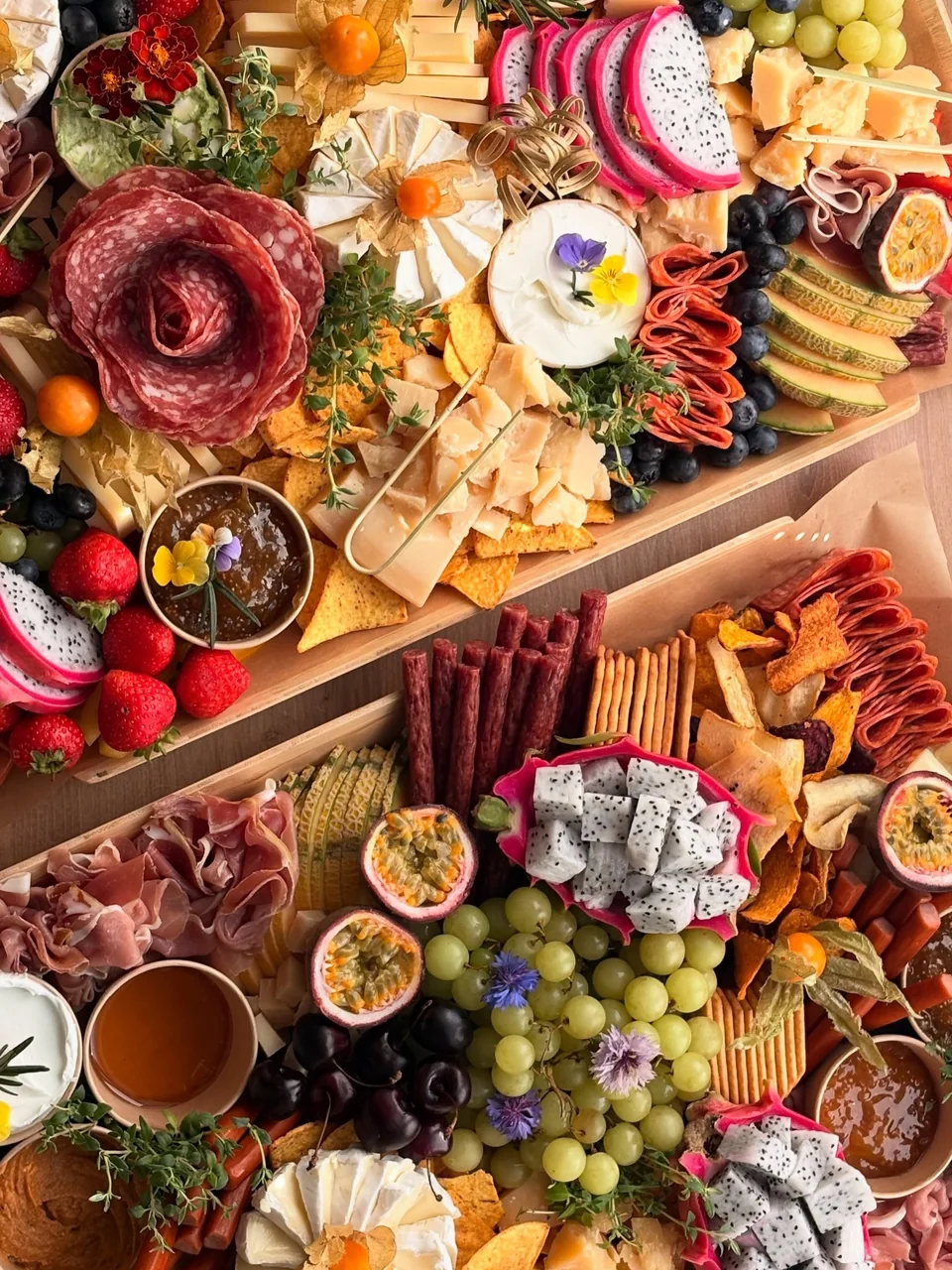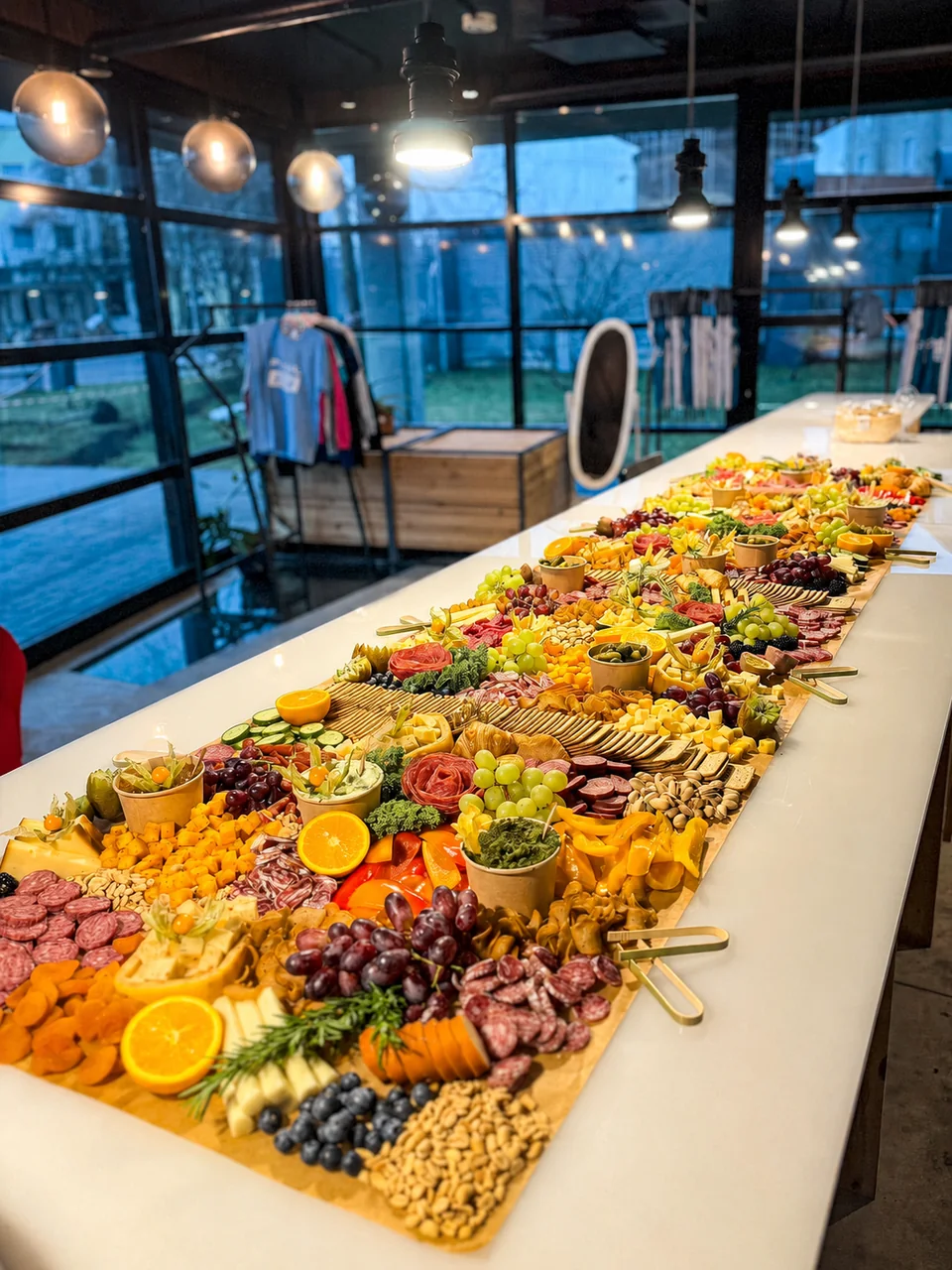
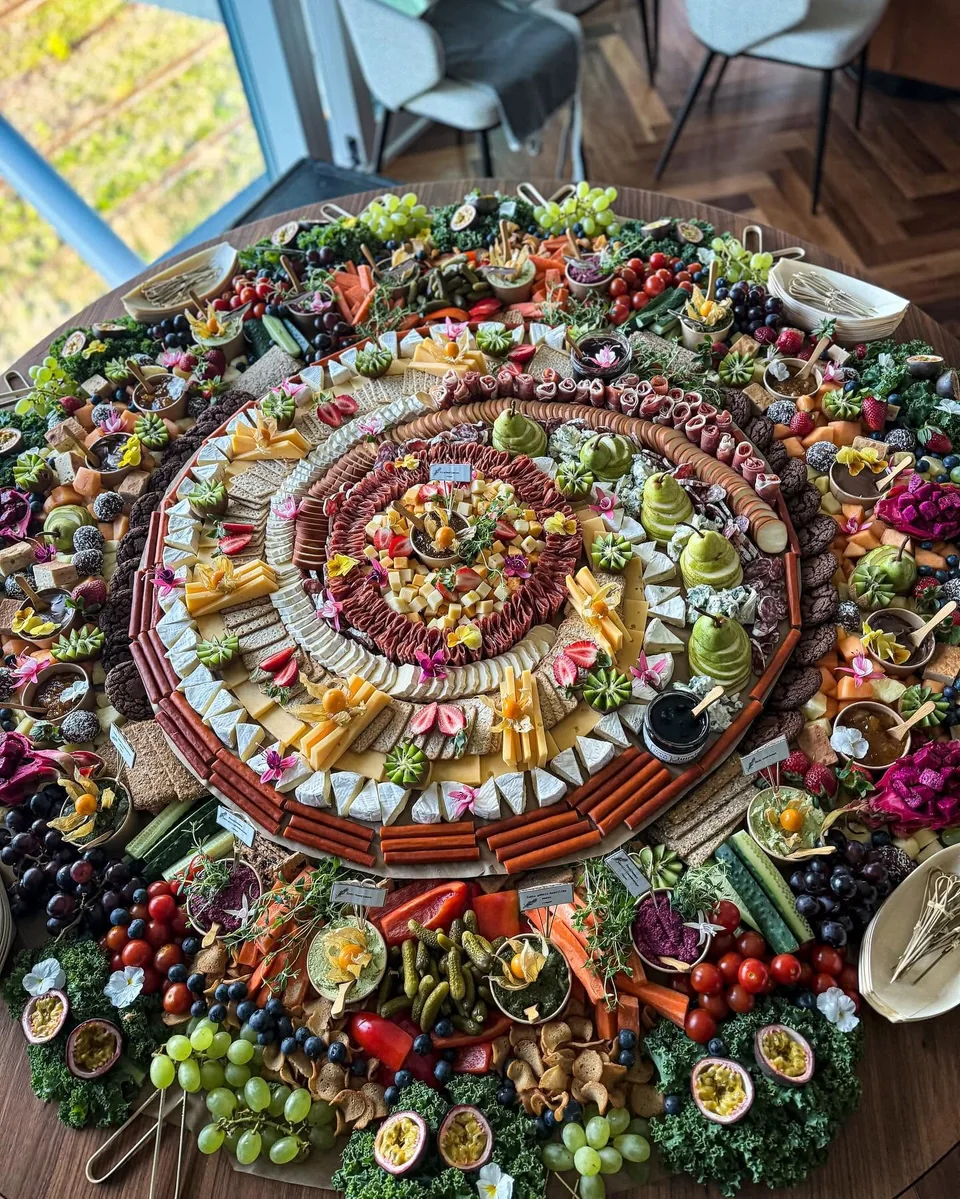
The easiest company events to execute are not necessarily the simplest. They are the ones with clear ownership and a precise definition of “ready.” A grazing-table provider can handle preparation, delivery, and on-site styling, but the internal brief still needs to explain the environment.
1. Define what the company is hosting
“Corporate event” could mean an employee appreciation afternoon, client reception, product launch, board meeting, holiday party, recruiting event, or conference gathering. Name the format and the outcome the company wants.
Then explain the table’s role. Is it the main food experience, a welcome before a program, an accompaniment to drinks, or part of a larger menu? This gives the provider context for size, timing, and placement.
2. Clarify who will attend
Share the best current guest-count estimate and the date it will be finalized. Note whether people arrive together or over a window, and include employees, clients, speakers, vendors, or family members who may eat.
If different groups attend at different times, describe the largest likely overlap. Guest flow can matter more than total registration because it determines how many people approach the table simultaneously.
3. Document the Minneapolis location
An office, coworking space, hotel, event venue, and conference floor each have different access conditions. Provide the full address and identify whether the table will be inside your own workplace or at a third-party venue.
For offices, note loading access, parking, elevators, front-desk procedures, security, and the distance from the entrance to the event room. For venues, confirm that independent outside food vendors are permitted and request their setup requirements.
Send the available table dimensions or a photograph of the proposed location. Make sure the area is not needed for registration, presentation equipment, or primary circulation.
4. Set a precise guest-ready time
“The event starts at 5:00” does not explain when employees begin arriving, when doors open to clients, or when the setup area must be clear. Set an agreed guest-ready time and work backward from it.
Share the earliest access time, program schedule, and any room transitions. If executives rehearse in the space or the facilities team rearranges furniture beforehand, make sure the setup window does not conflict.
Pretty Arrangements agrees on the guest-ready time in advance. If the table is not fully styled by that time for a reason within our control, the delivery and on-site styling fee is refunded.
5. Coordinate the complete food plan
List beverages, desserts, passed appetizers, meals, or other stations being offered. A grazing table should complement the event rather than accidentally duplicate another vendor’s food.
Share known dietary needs and ask what can be accommodated. Avoid promising an allergen-free environment unless the provider and venue can genuinely support that claim. Decide how relevant information will be communicated to guests.
6. Assign one internal owner
Choose a person who can confirm access, placement, and timing on the day. That person should be reachable while vendors arrive and authorized to make small decisions. They should not also be the keynote speaker or someone unavailable in a closed meeting.
If a planner or venue manager is coordinating the event, introduce them before the date. Clear contact details prevent the provider from having to reconstruct the chain of responsibility during setup.
A copy-ready event brief
Event: type and purpose
Date and location: full address and room
Guests: estimated count and arrival pattern
Timing: access time, guest-ready time, and event duration
Food: table’s role, other food, and dietary needs
Access: parking, loading, security, stairs or elevators
Space: table dimensions, placement, and photograph if available
Contacts: internal owner and venue or planner contact
The planning advantage
A complete brief lets your team delegate with confidence. The provider knows what success looks like, the venue knows who is arriving, and one internal owner can focus on the event rather than coordinating food pickup, transport, and styling.