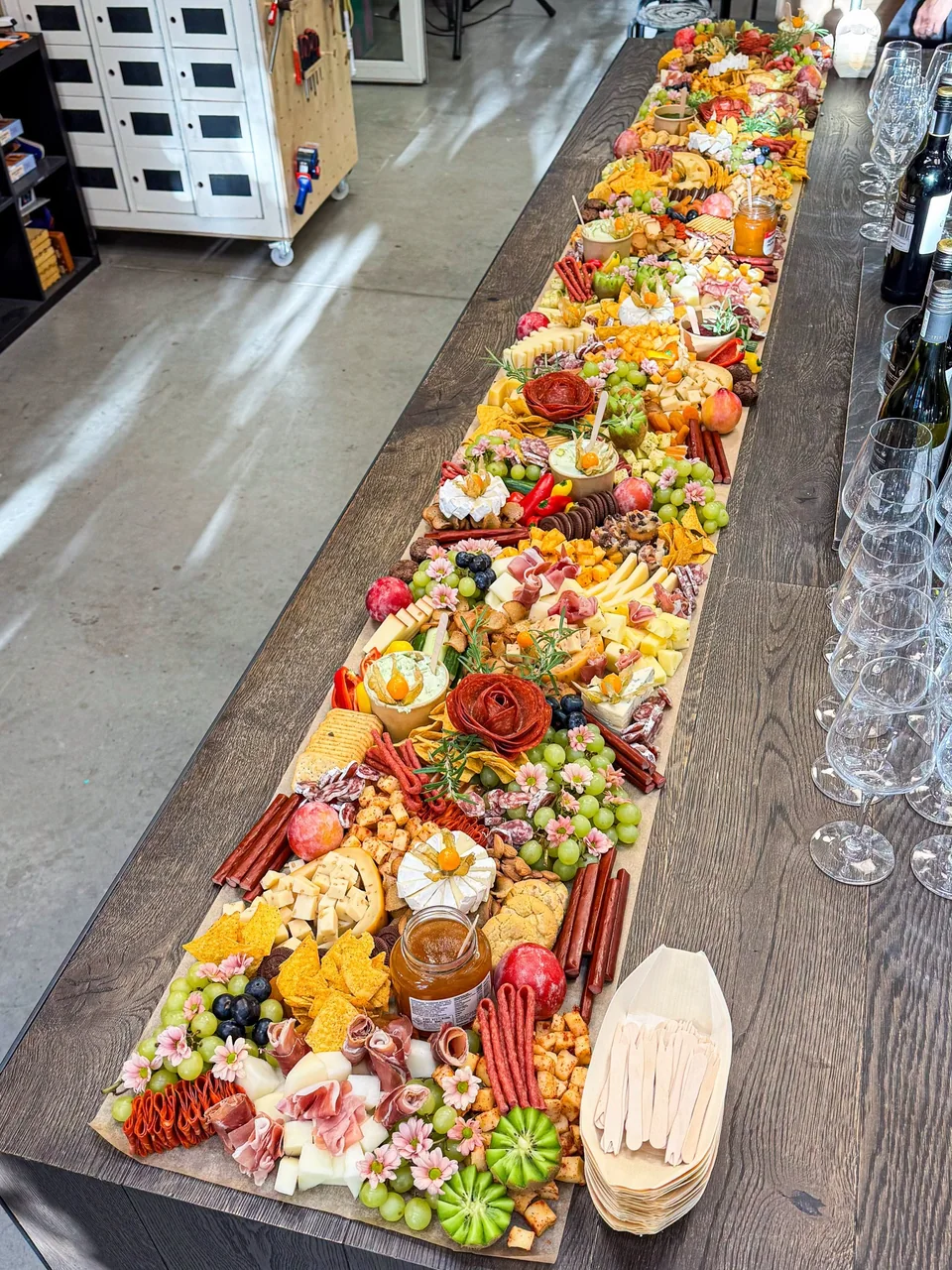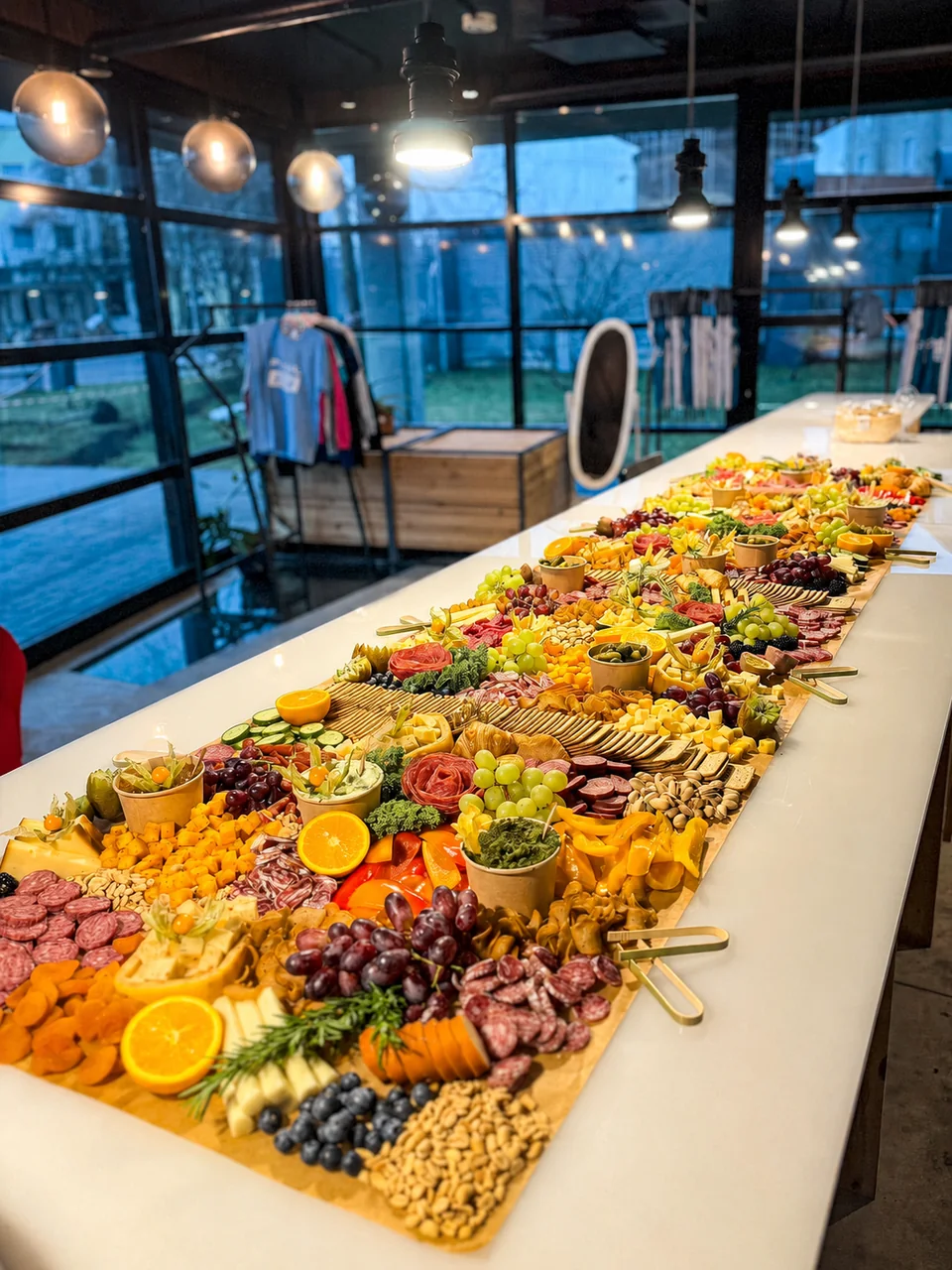
DIY can fit a small, flexible gathering when someone has time, cold storage, transport, venue access, setup skill, and no competing event-day role. Professional service is usually the stronger fit when timing is fixed, the venue has rules, the host must be present elsewhere, or the table needs to arrive completely styled. Compare the full workload and handoff—not food cost alone.
Start with the event-day outcome
Picture the thirty minutes before guests arrive. Who is shopping for last-minute items, transporting chilled food, finding the service entrance, assembling the display, labeling dietary options, clearing packaging, and solving a late room change? If that person is also getting married, greeting clients, running registration, or directing vendors, the DIY plan has a staffing conflict.
A professional plan solves a different problem: assigning preparation, delivery, and setup to a provider with a defined guest-ready handoff. Pretty Arrangements’ service is preparation, delivery, and complete on-site styling. Other providers may define their scope differently, so confirm the actual outcome in writing.
Compare DIY and professional service across the full job
| Decision area | DIY plan | Professional plan |
|---|---|---|
| Menu and quantity | Host selects, shops, and adjusts | Provider recommends within its service scope |
| Preparation | Uses host kitchen, tools, storage, and time | Defined by provider and proposal |
| Transport | Host protects food and display pieces in transit | Delivery responsibilities are assigned |
| Venue access | Host confirms permission, entry, parking, and timing | Provider still needs the facts, but execution can be coordinated |
| On-site styling | Host assembles while managing the rest of the event | Assigned to the service team when included |
| Food-safety plan | Host owns storage, timing, and service decisions | Responsibilities should be specified with the provider |
| Tableware and cleanup | Host supplies, places, collects, and disposes | Included items and exclusions are documented |
| Contingency | Host solves shortages, damage, delay, and room changes | Provider and event contact follow the agreed escalation plan |
When DIY can be a sensible choice
DIY is most realistic when the event is small, informal, close to the preparation location, and flexible about presentation timing. The host should have appropriate food storage, a reliable vehicle plan, enough setup time, a venue that allows the arrangement, and at least one person whose only job during setup is the table.
A contained board or platter is often easier to self-manage than a large installation across an event surface. If portability is the priority, compare the formats in the grazing table versus charcuterie board guide.
DIY is not automatically inferior; it simply moves every operational responsibility to the host. That can be an acceptable trade when the gathering is forgiving and the person doing the work enjoys it.
When professional service is the stronger operational choice
Professional preparation and on-site styling become more valuable as the event adds fixed timing, more guests, formal expectations, venue restrictions, travel, limited refrigeration, or multiple vendors. Weddings, client receptions, company events, grand openings, and planner-led celebrations often have little room for the host to disappear into setup work.
It is also useful when the table is intended to be part of the room design rather than only a place to set food. The provider needs the surface dimensions, room photographs or floor plan, guest flow, access route, and exact guest-ready time to plan that result.
Hiring a provider does not remove the need for event facts. It changes who executes the work. A complete brief still protects the timeline and the final setup.
The work most DIY budgets forget
- Planning the menu around the event’s actual food role
- Shopping across one or more stores and handling substitutions
- Preparing, chilling, storing, and packing food
- Cleaning and transporting boards, risers, vessels, and serving tools
- Protecting food and fragile display pieces in the vehicle
- Coordinating parking, loading, security, elevators, stairs, and room access
- Building the arrangement before guests enter
- Removing packaging and keeping the setup area guest-ready
- Providing labels, plates, napkins, utensils, waste, and cleanup
- Deciding who monitors the display after handoff
Assign each task a name and time window. If the same person owns several simultaneous tasks, the plan is not complete yet.
A practical decision rule
Choose DIY when the host has both the desire and the operational capacity to do the complete job. Choose professional service when protecting the event timeline, host attention, venue coordination, and finished presentation is worth assigning that job to someone else.
Before comparing costs, use the quote-comparison checklist so each option includes the same responsibilities.