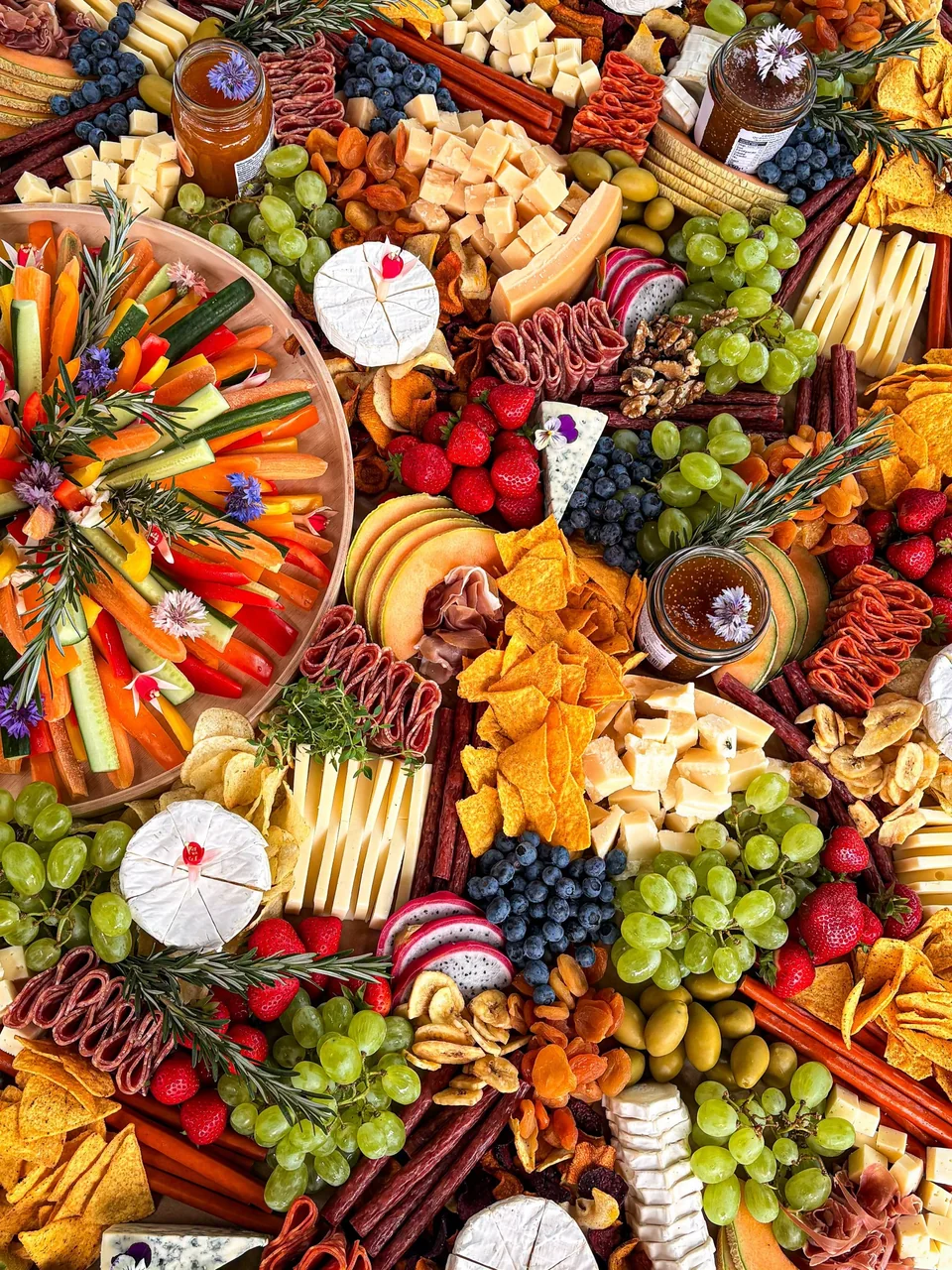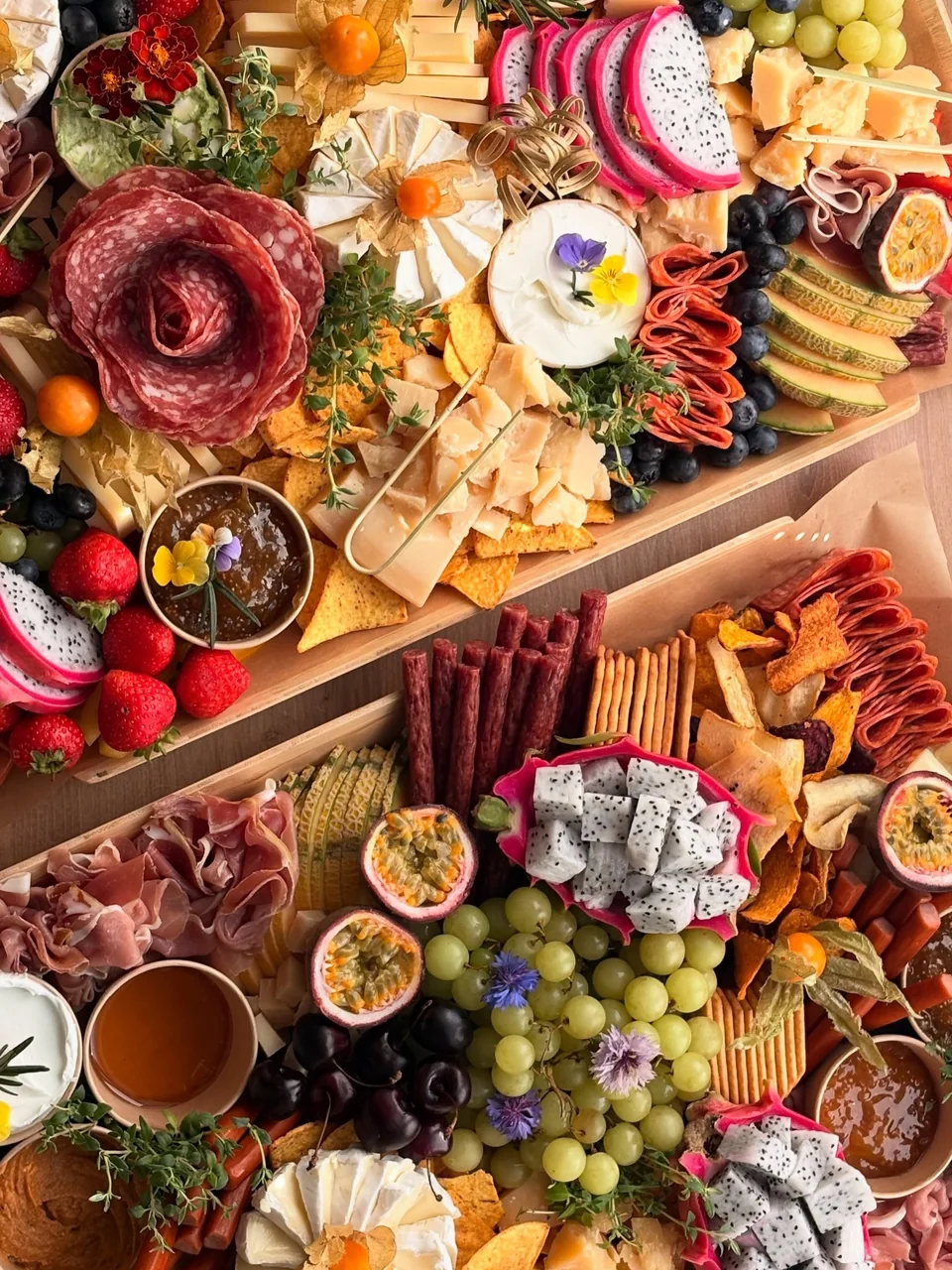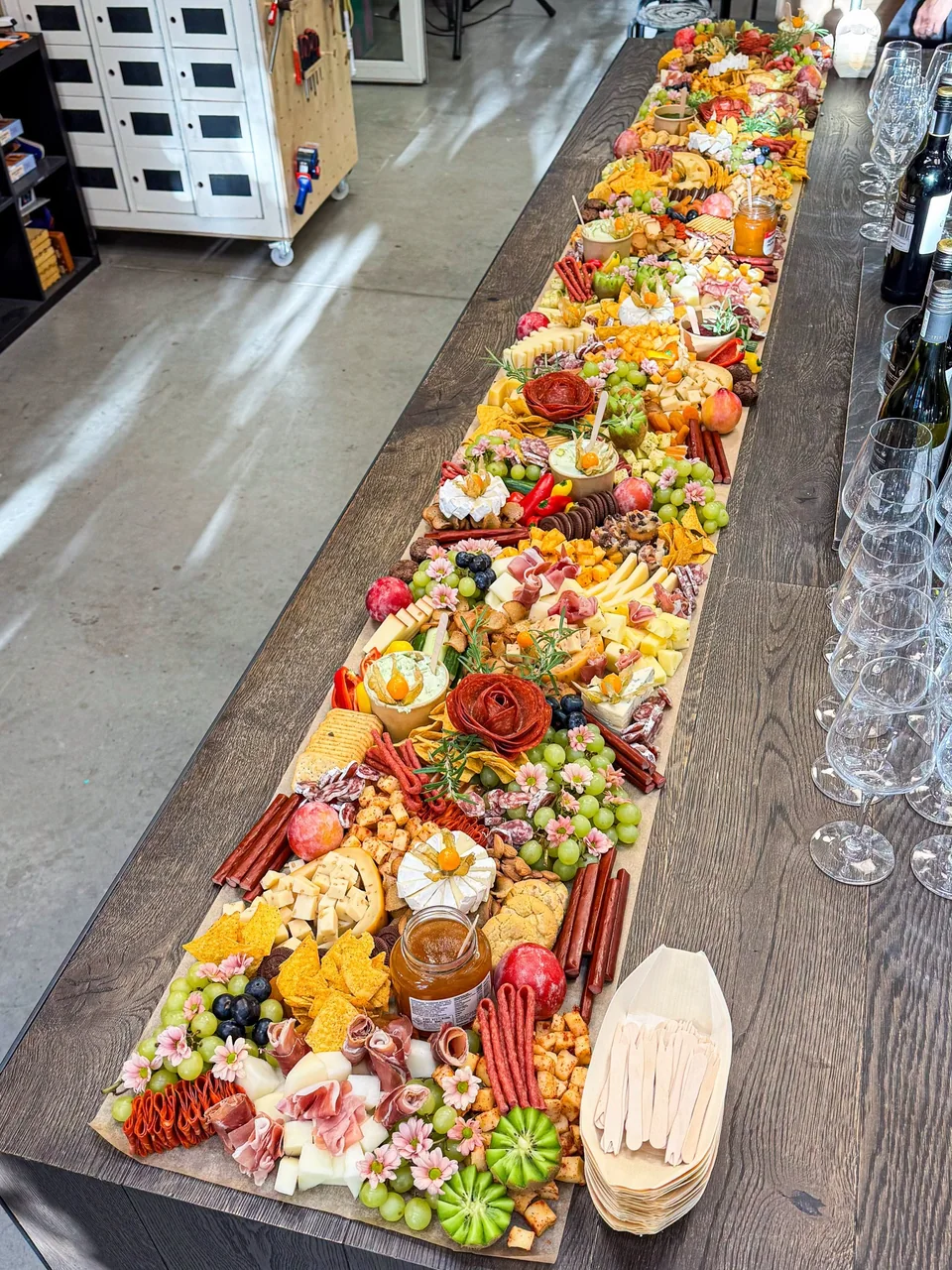
Compare grazing-table quotes only after every provider has the same event brief. Confirm the food’s role, guest count, service window, venue access, preparation, delivery, on-site styling, display equipment, tableware, staffing, cleanup, travel, taxes, and exclusions. The lowest total can represent a different service rather than a better price.
Give every provider the same event brief
A quote cannot be compared fairly when one provider believes the table is a light welcome and another believes it is the primary food. Send the same facts to everyone: the Minnesota address, event format, guest count, guest-ready time, service window, other food, dietary requests, available surface, venue rules, and access route.
Separate confirmed details from estimates. If the final count or room is still pending, say so. A provider can then identify which assumptions affect the proposal instead of hiding those assumptions inside a total.
The grazing-table event brief gives you a clean starting structure. For a first inquiry, the goal is not to make every decision; it is to make the open decisions visible.
Compare the service scope line by line
| Scope item | What to confirm | Why it changes the comparison |
|---|---|---|
| Food role | Welcome, cocktail hour, part of a larger menu, or primary grazing experience | The same headcount can require a different recommendation. |
| Preparation | What is prepared and what menu decisions remain open | Labels such as “standard” or “premium” are not comparable without details. |
| Delivery | Address, delivery window, handoff, parking, and travel assumptions | Dropping off a portable board is not the same scope as an on-site installation. |
| On-site styling | Whether the provider completes the presentation in the event space | This affects labor, access time, and who owns final placement. |
| Surface and display pieces | Who supplies the table, linen, risers, boards, vessels, labels, and serving tools | Missing display elements can become a separate rental or host responsibility. |
| Guest tableware | Plates, napkins, utensils, and disposal or washing responsibility | A food-only proposal may leave this entire category to the venue or host. |
| Service after setup | Whether staff remain, replenish, monitor, or depart after handoff | Staffed service and a completed setup solve different operational needs. |
| Breakdown and cleanup | What happens to display items, leftover food, waste, and the table after service | Venue cleanup deadlines can create costs or duties later. |
| Travel and access | Mileage or travel zone, stairs, elevators, security, loading dock, and long carries | The public address alone rarely describes the complete load-in. |
| Total and exclusions | Taxes, fees, optional upgrades, deposit, payment schedule, and explicit exclusions | A clear total should show what can still change. |
Ask questions that expose differences before you book
What will the room look like when the provider leaves?
Ask for the completed handoff: food placed on an existing table, a portable board delivered to a contact, or a completely styled presentation ready for guests. Those outcomes should not be treated as interchangeable.
What does the guest count assume?
Confirm whether the recommendation assumes a short cocktail hour before dinner, staggered arrivals, a meeting break, or the event’s primary food. If the quote uses a per-person description, ask what event role that description is intended to support. The guest-count planning guide explains why headcount is only the first input.
What is not included?
Exclusions are often more useful than broad inclusions. Ask specifically about the table, linen, serving pieces, guest tableware, labels, staffing, cleanup, travel, tax, gratuity, and return pickup. A provider may include some, all, or none; the point is to make the boundary explicit.
What can change the final total?
Guest-count changes, menu choices, a new venue, a longer travel distance, a different setup window, stairs, or added service can alter scope. Ask which assumptions are fixed and which will be confirmed later.
Pretty Arrangements prepares, delivers, and completely styles premium grazing tables on-site. Use the worksheet below to compare that complete service with proposals that may describe delivery or setup differently.
Printable grazing-table quote comparison worksheet
Copy the same event facts into each provider column. Mark an item “included,” “excluded,” “optional,” or “not yet confirmed.”
| Decision | Your event | Provider A | Provider B |
|---|---|---|---|
| Date and exact address | |||
| Guest count and food role | |||
| Guest-ready time and duration | |||
| Food and dietary scope | |||
| Preparation and delivery | |||
| On-site styling | |||
| Table, linen, and display pieces | |||
| Plates, napkins, and serving tools | |||
| Staffing or handoff | |||
| Breakdown, pickup, and cleanup | |||
| Travel, taxes, and fees | |||
| Exclusions and open assumptions |
Choose the proposal that is easiest to execute
Price matters, but a reliable event decision also considers scope fit, clarity, communication, venue compatibility, and who owns each task. A proposal is stronger when the host, planner, venue, and provider can all read it and understand the same plan.
For Minnesota events, include the exact location rather than only the city. Building access can be very different for a downtown office, hotel ballroom, private home, park building, or rural venue. Review the venue-access checklist before requesting final proposals.