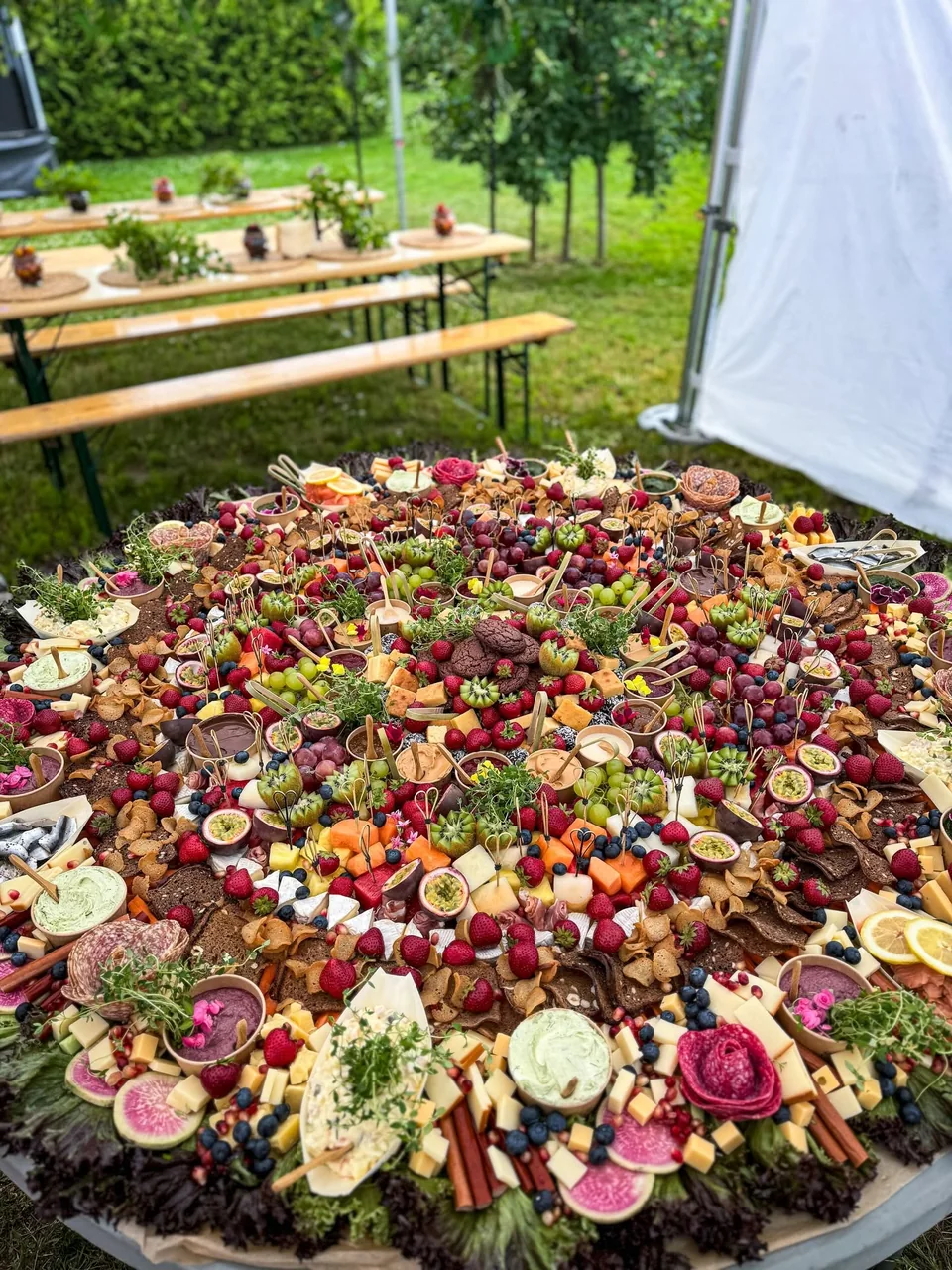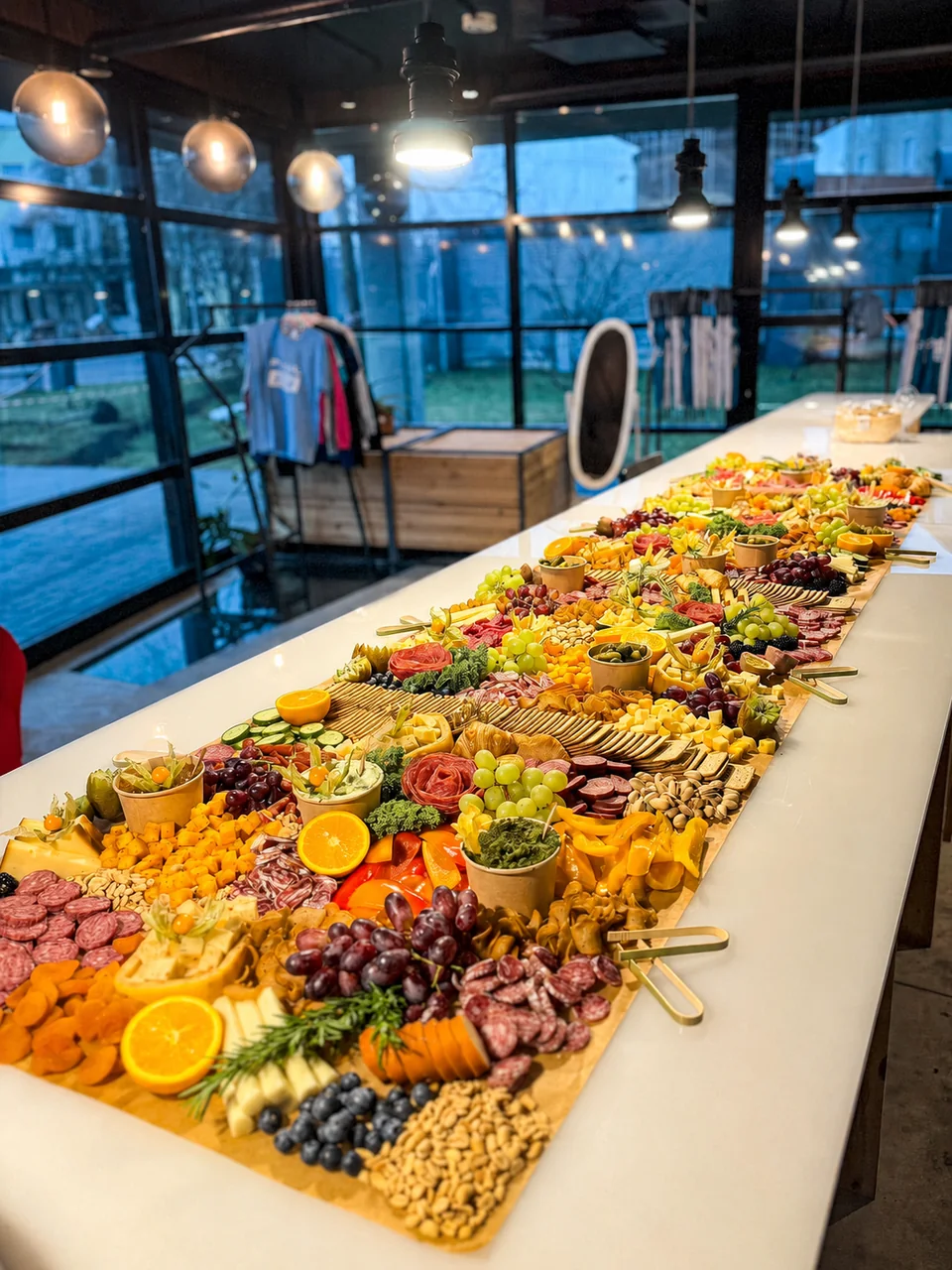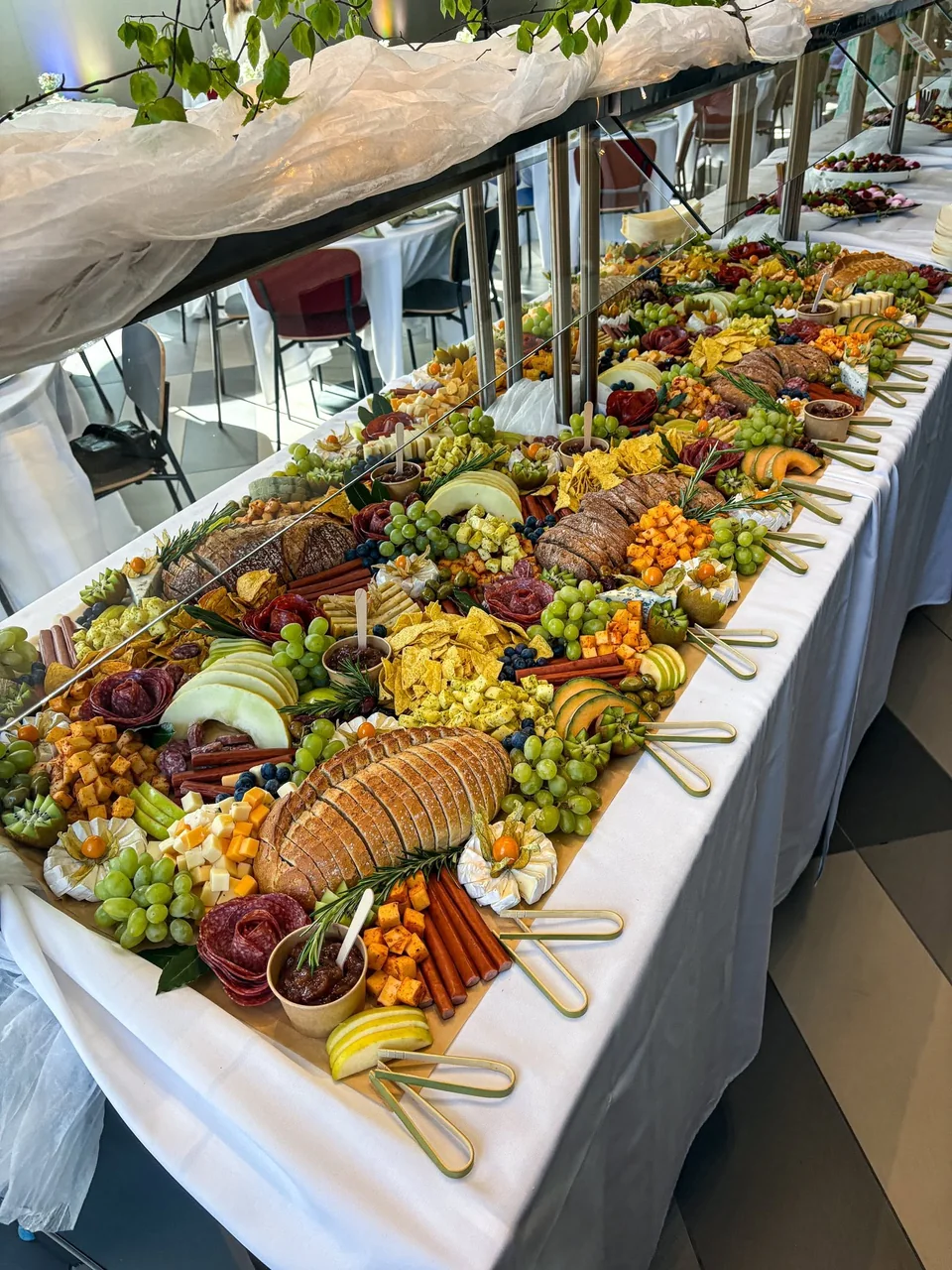
A grazing table fits a nonprofit gala best as a defined hospitality moment—often arrival or cocktail hour—rather than an undefined substitute for the full event menu. Keep it clear of registration, silent-auction displays, sponsor signage, and the route into the program. Assign one decision-maker who can approve placement and solve venue access questions.
Name the table’s job in the gala program
Write one sentence that describes the food role: welcome guests before the ballroom opens, support cocktail-hour conversation, accompany a silent auction, or provide one component of a larger menu. This determines when the table must be ready, how guests approach it, and what attendees will expect later.
If the event promises dinner, state that clearly. A beautiful arrival display should not create uncertainty about the meal. Use the appetizer-or-meal guide to align the guest message with the proposal.
Put the grazing table into the run of show
| Gala moment | Guest behavior | Planning decision | Primary owner |
|---|---|---|---|
| Registration | Queues, badges, coats, greetings | Keep food beyond the check-in path and leave room for accessibility | Guest-services lead |
| Cocktail hour | Conversation, drinks, auction browsing | Place food near hospitality without competing with the bar or auction flow | Planner |
| Program seating | Guests move together into another room | Define whether the table closes, remains visible, or belongs to a separate space | Program lead |
| Appeal or auction | Attention shifts to stage and screens | Protect sight lines and prevent active food traffic through the program | Production lead |
| Close | Guests depart, volunteers reconcile materials | Document who owns each remaining room and item | Event director |
Separate food, fundraising, and sponsor assets
Auction sheets, payment devices, bid displays, sponsor logos, pledge cards, and guest table assignments all need clean, legible space. Do not layer them onto the food surface. Give each function its own zone and preserve a clear route to exits and accessible seating.
The event venue may have its own outside-vendor, loading, insurance, furniture, and cleanup requirements. Confirm them directly and use the venue access checklist to give every vendor the same entrance, room, and timeline.
Describe attendance beyond the ticket count
State sold tickets, expected complimentary guests, volunteers, speakers, vendors, and whether people arrive together. Also explain whether the gala has dinner, passed appetizers, desserts, or sponsor hospitality. The guest-count guide helps turn those details into a usable food brief without relying on one generic serving formula.
Gala responsibility matrix
| Decision | Nonprofit team | Planner or venue | Food provider |
|---|---|---|---|
| Purpose and budget | Defines the hospitality goal and approver | Aligns the choice with the program and contract | Responds to the stated scope |
| Guest count | Shares ticket, volunteer, and sponsor assumptions | Confirms capacity and arrival pattern | Uses the confirmed count and food role |
| Room | Protects sponsor and fundraising priorities | Approves placement, surface, and access | Styles the agreed arrangement on site |
| Event-day decisions | Names one available contact | Resolves property questions | Follows the confirmed handoff |
When a grazing table is not the right gala solution
Use full-service catering when the gala requires a seated meal, table service, rentals, servers, or continuous replenishment. Choose a simpler contained format if the arrival window is extremely short or the venue cannot provide a protected surface. Do not ask volunteers to absorb unclear vendor responsibilities on event day.
Planning a Minnesota nonprofit event?
Share the date, venue, attendance assumptions, gala timeline, food role, and the person coordinating access. We will review the details and confirm whether the format is a fit.
Check gala availabilityThis guide is a planning framework, not a promise of venue permission or a specific service inclusion. Confirm property rules directly and use the written Pretty Arrangements proposal as the source of truth for the event’s actual scope.