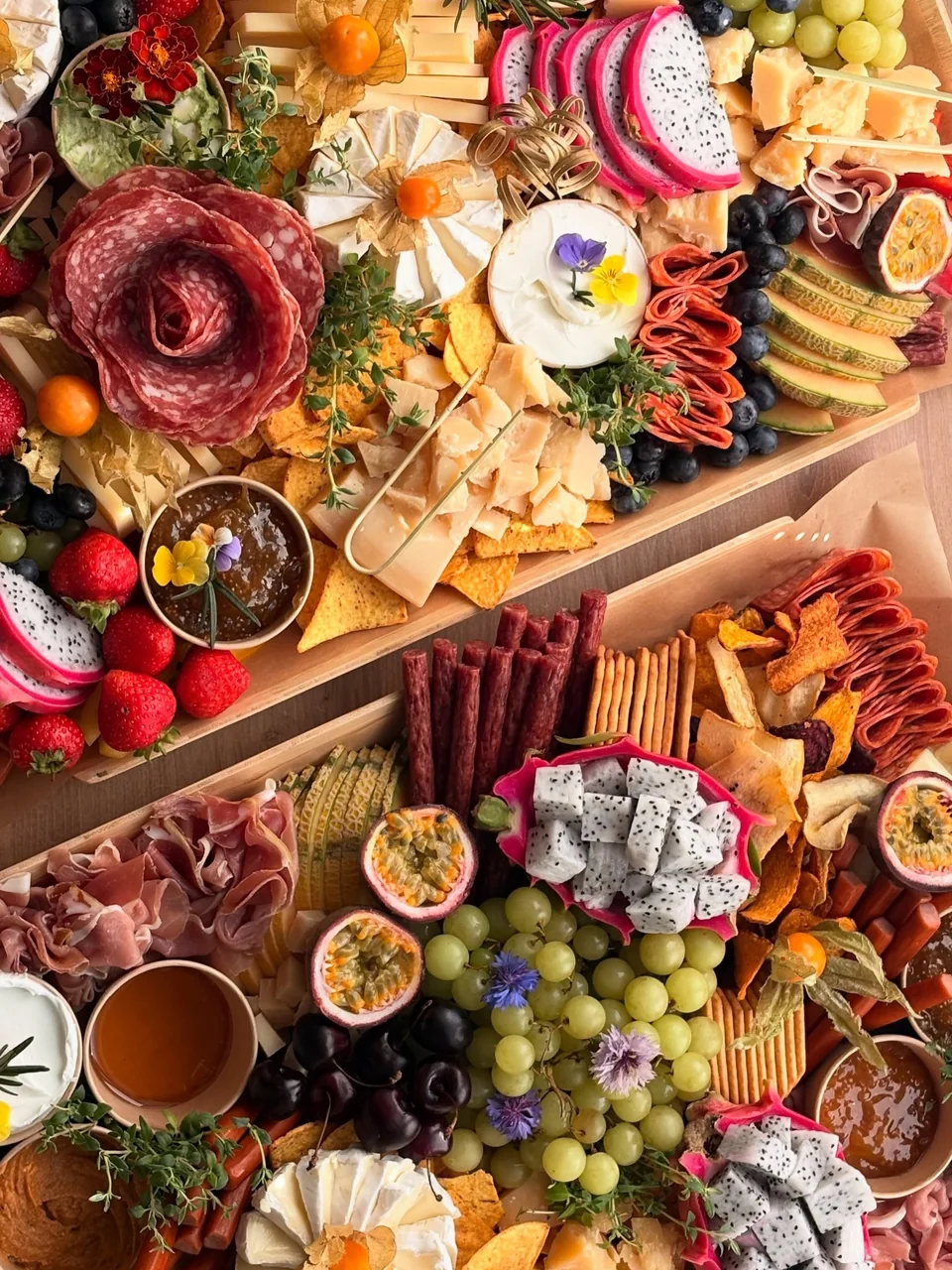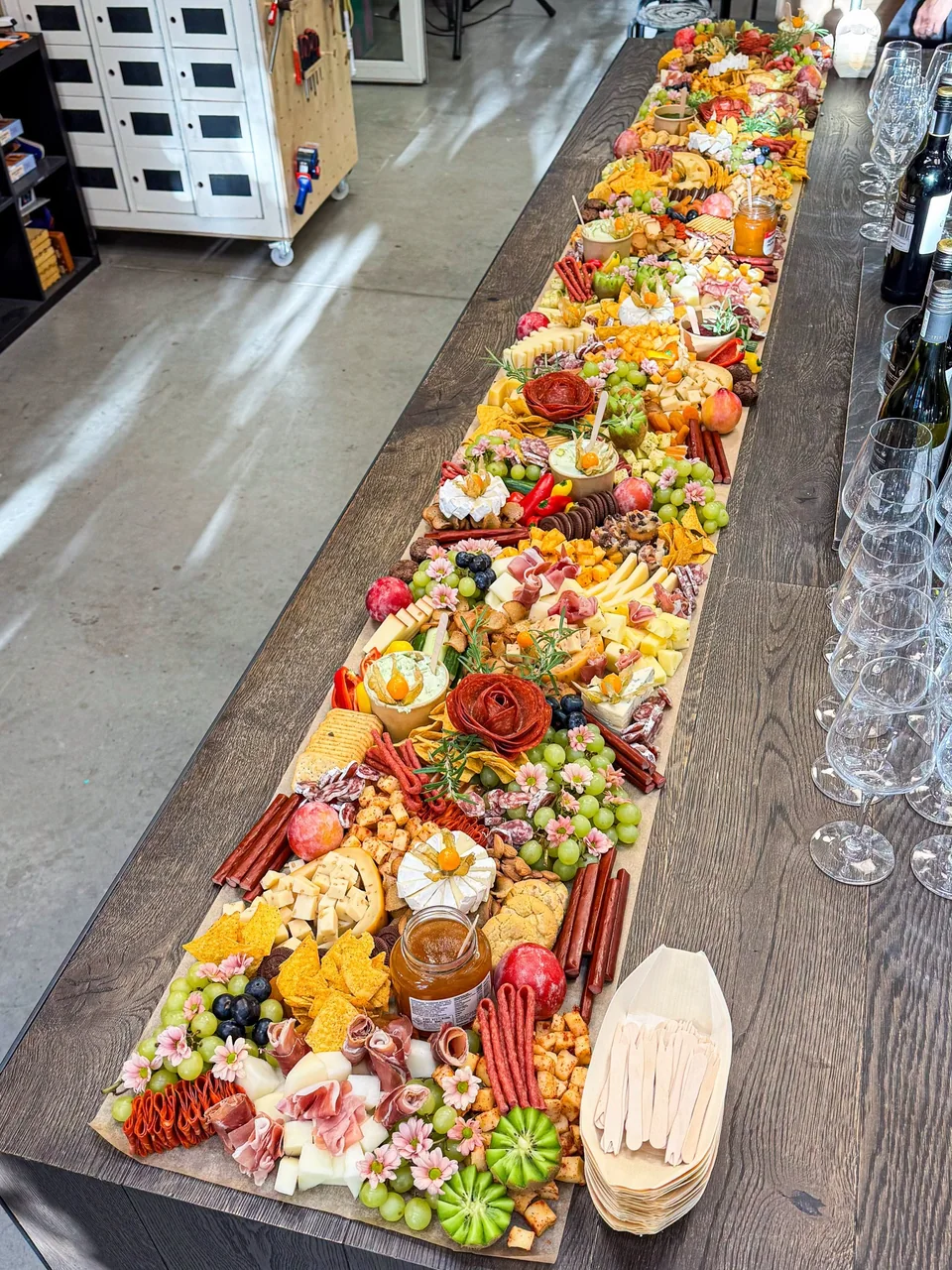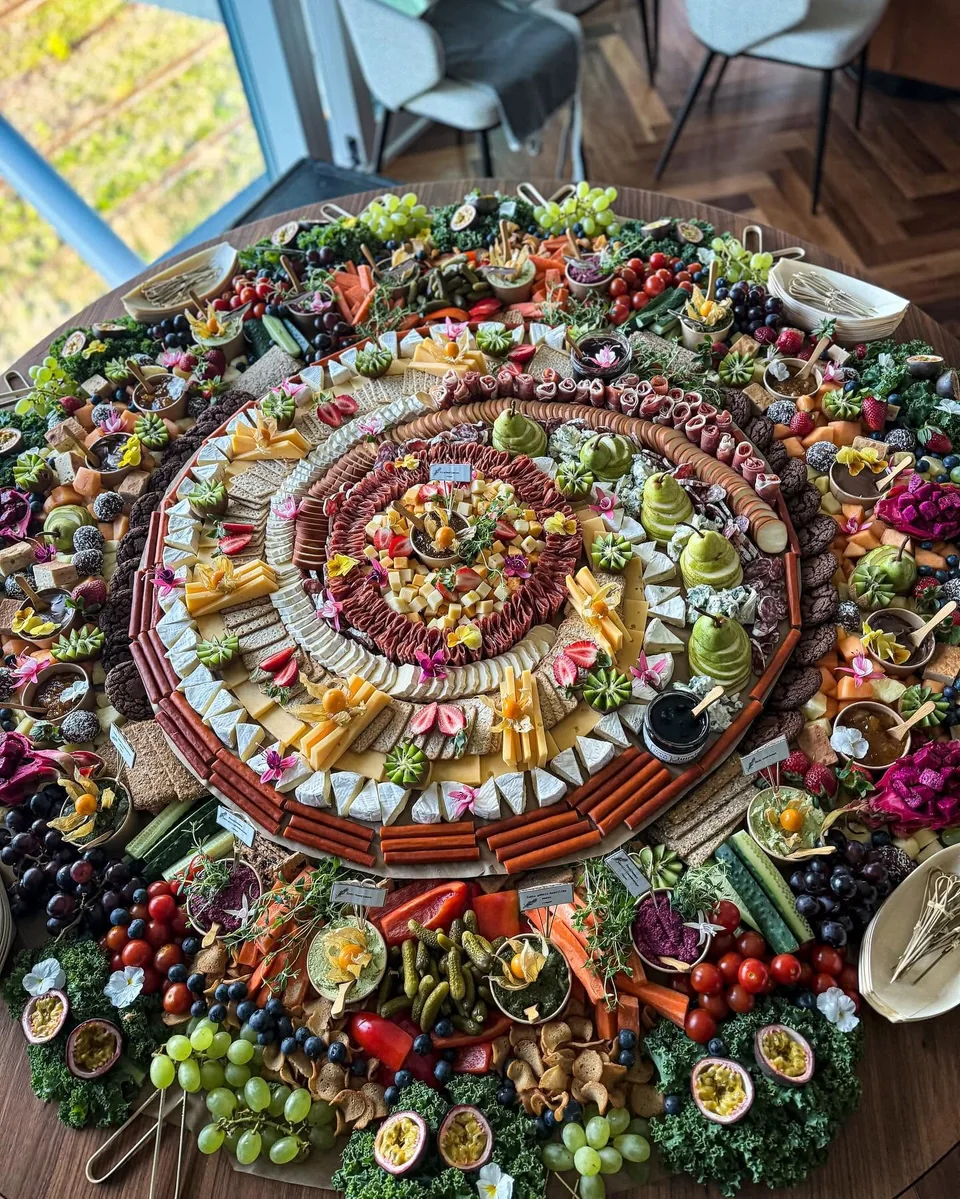
Choose a grazing table when guests should browse a shared display and the food should become a visual feature in the room. Consider individual charcuterie cups when controlled handoff, portability, or one-item-per-guest distribution matters more than a shared presentation. Availability and exact contents vary by provider, so confirm the service format before planning around it.
Shared destination versus individual handoff
A grazing table asks guests to approach a styled surface, choose from the display, and step away. It can create a natural gathering point and accommodate different appetites, but it needs clear surrounding space and a plan for serving tools and guest movement.
Individual cups are pre-portioned containers intended to be picked up or passed one at a time. They can distribute quickly when a pickup point or service team is organized. They also introduce a container for every guest and can be less flexible if attendance changes.
The names do not guarantee a particular menu, portion, dietary accommodation, or service style. Ask the provider exactly what is offered and what happens after delivery.
Side-by-side planning comparison
| Consideration | Grazing table | Individual cups |
|---|---|---|
| Guest experience | Self-directed browsing at a shared display | One portion picked up or handed to each guest |
| Visual role | Can become a room focal point | Creates a repeated individual presentation |
| Guest flow | Needs circulation around the table | Needs an efficient pickup or passing plan |
| Portion flexibility | Guests choose items and amount | Contents are decided before service |
| Attendance changes | Planning can absorb some variation depending on scope | One-per-person formats depend more directly on an accurate count |
| Dietary communication | Shared display needs labels and cross-contact expectations | Special portions need identification and controlled handoff |
| Waste stream | Shared serving pieces plus guest tableware | An individual container for each portion plus guest waste |
| Setup | Surface, styling window, access, and placement matter | Storage, staging, and distribution space matter |
Choose a grazing table when the display should belong to the room
Weddings, company receptions, open houses, and milestone celebrations often benefit from a shared presentation because guests are already moving and talking. The table can support that movement when it is visible without blocking the bar, registration, entrance, or main aisle.
A table is also the more natural choice when variety and discovery are part of the experience. Guests can select what appeals to them, although dietary needs and cross-contact limitations still require direct discussion. See the dietary communication guide before promising a particular accommodation.
Consider individual portions when distribution is the priority
Individual portions may suit a scheduled handoff, short meeting break, assigned seat, or environment where guests should take food and move away immediately. The plan needs a reliable count, a staging location, cold-storage decisions, and someone responsible for distribution.
Ask whether portions are delivered ready for handoff, whether staff are included, how special dietary portions are marked, and what happens to extras. A “cup” can describe many different products; only the provider’s written scope makes it operationally meaningful.
Avoid an accidental hybrid plan
Ordering individual items and then arranging them across a styled table can require both systems: individual packaging plus an installation surface, display plan, and cleanup. That may be intentional, but it should not happen because nobody clarified who owns the presentation.
If more than one food format is used, map when each appears and what job it performs. A grazing table might welcome guests while another caterer handles dinner; individual portions might support a brief meeting break. Duplication is expensive and can confuse service flow.
Pretty Arrangements specializes in premium grazing tables and charcuterie-style arrangements. Confirm the available format for your event rather than assuming every provider offers every variation.
Questions to answer before choosing
- Will guests arrive together, in waves, or at assigned times?
- Should food create a shared visual moment or move through the room?
- Does the venue provide enough surface and circulation for a table?
- Who owns staging, refrigeration, distribution, labels, and waste?
- How accurate will the final guest count be?
- What dietary communication and cross-contact limits apply?
- What other food is served, and when?
If the choice is between a portable board and a full installation instead, use the board-versus-table guide.