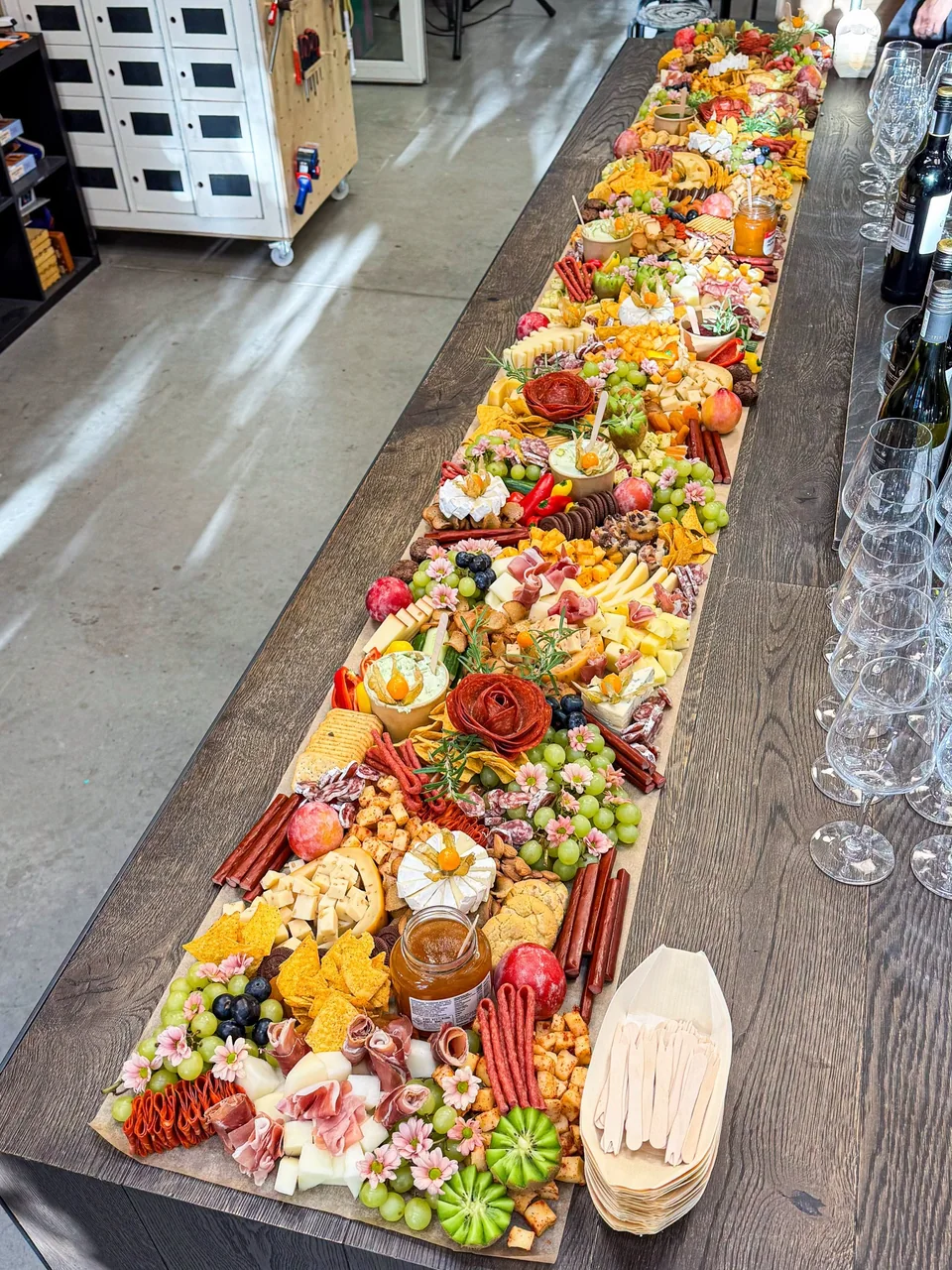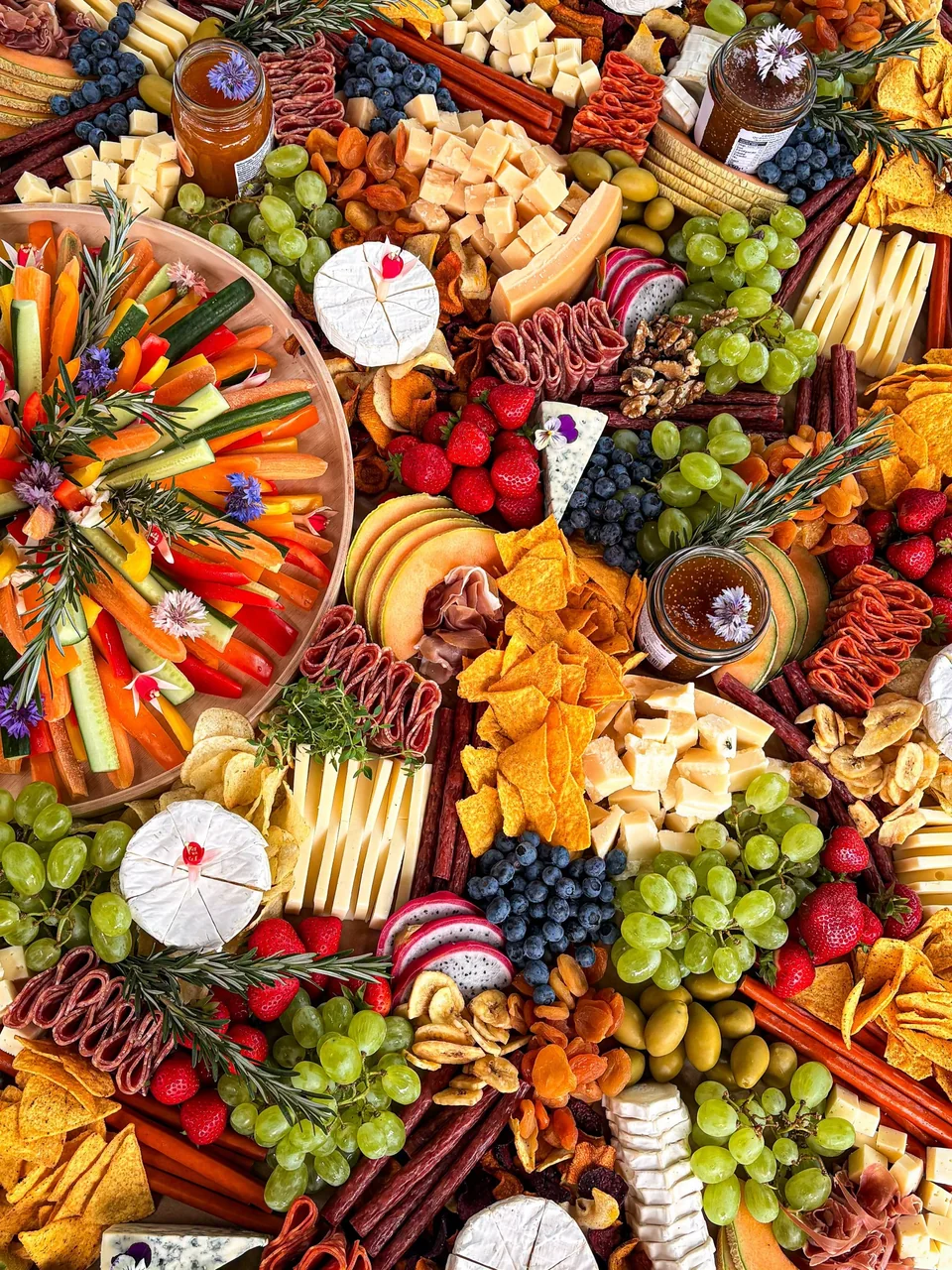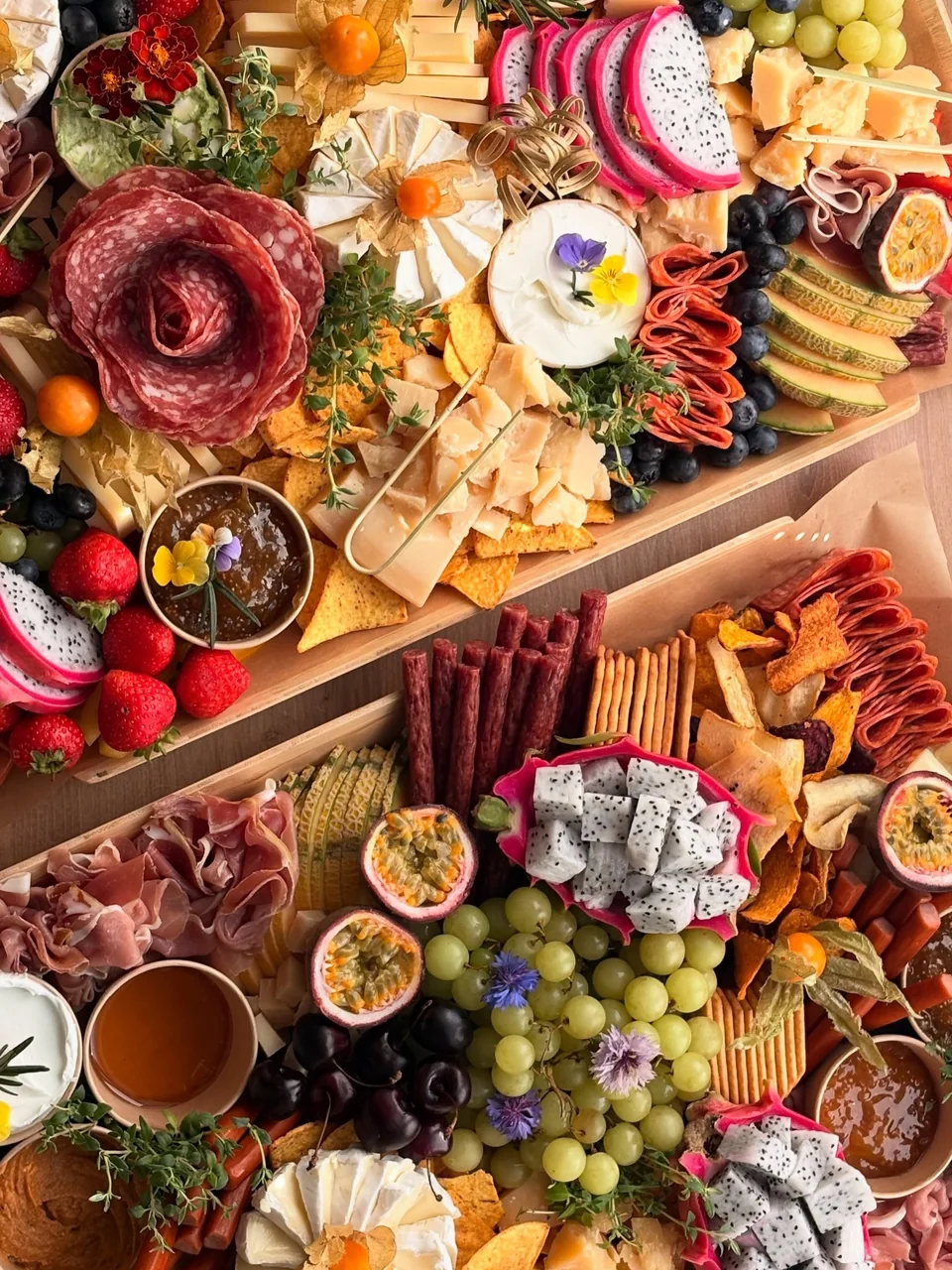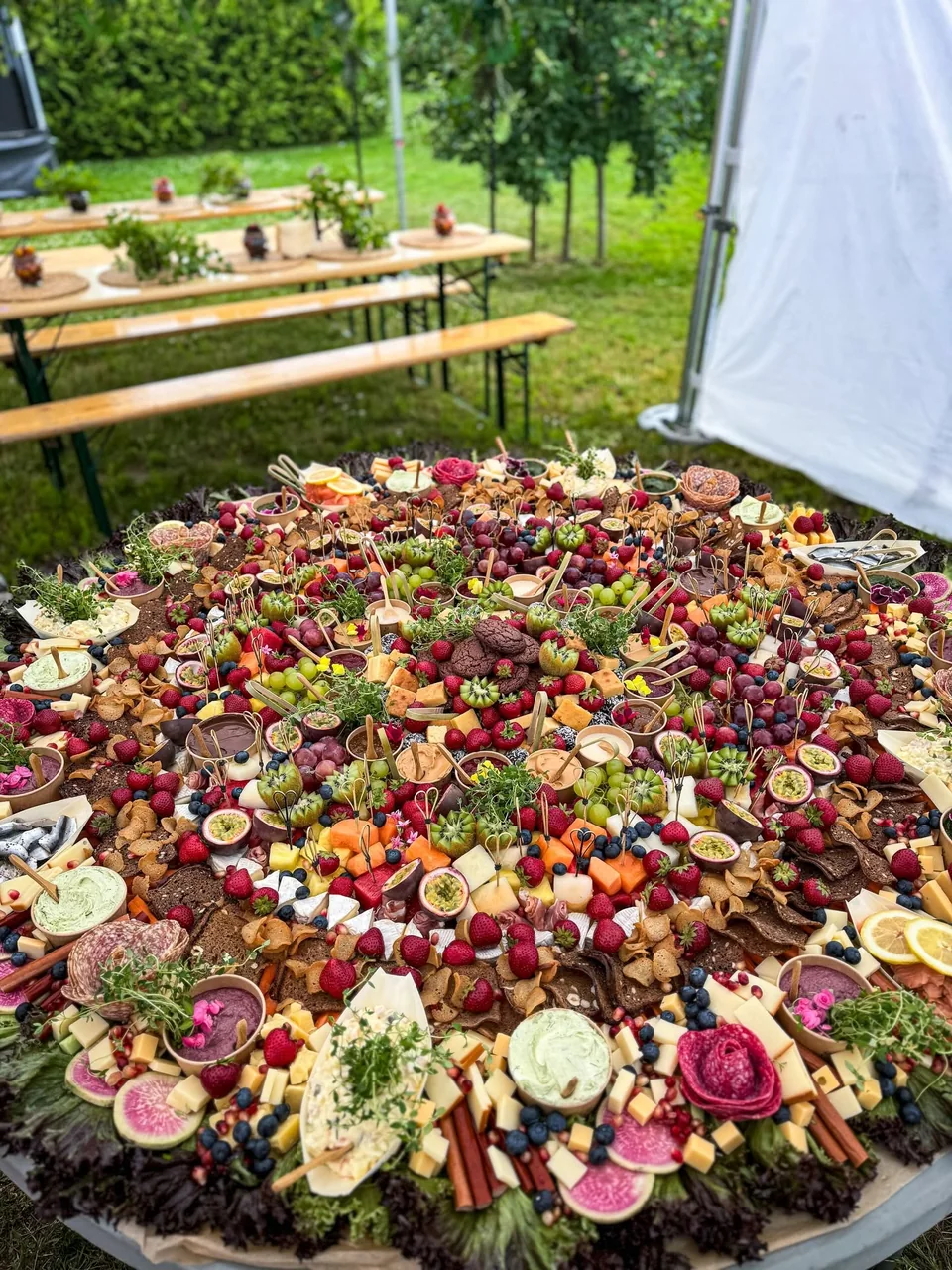
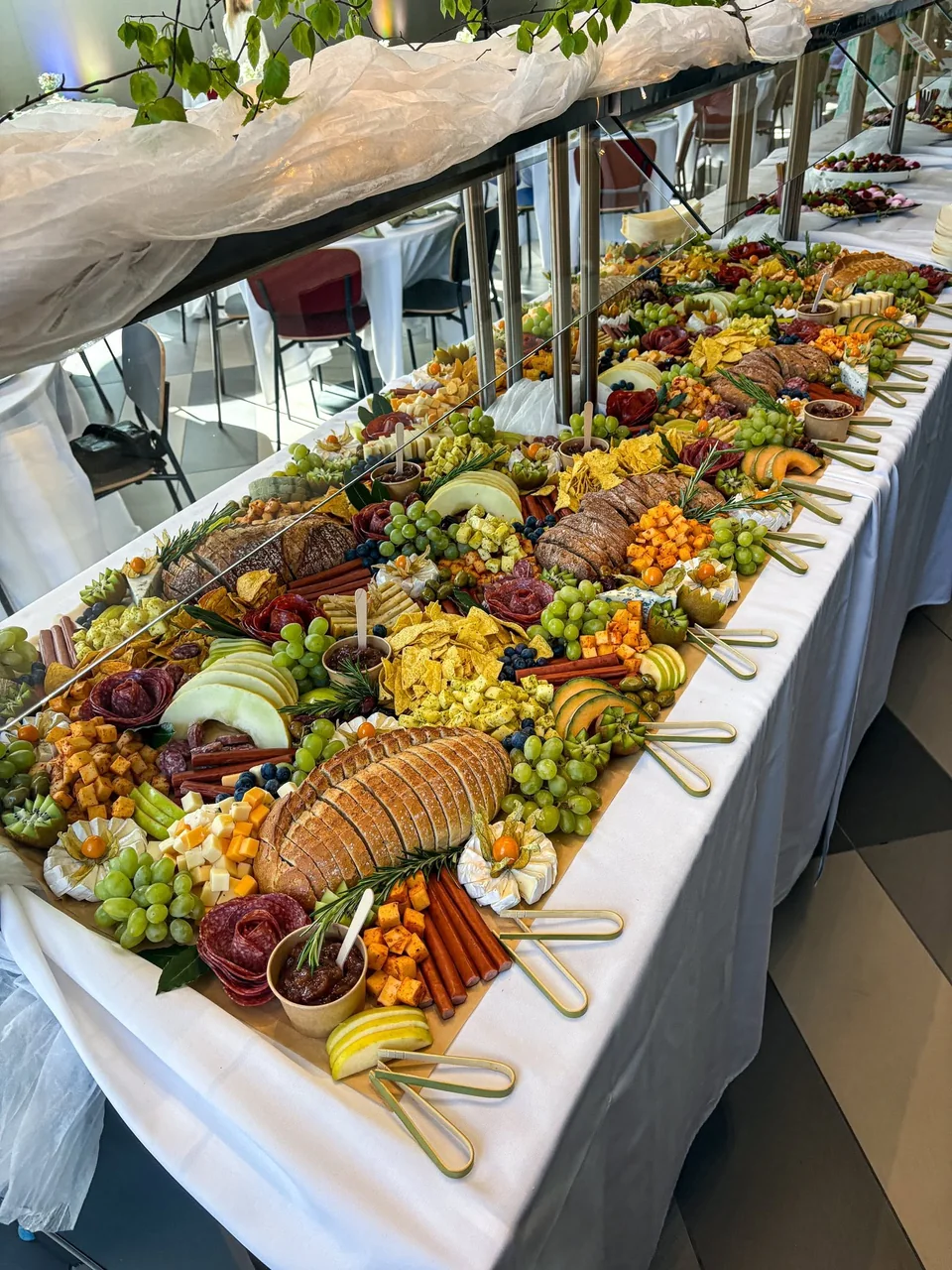
A wedding grazing table can welcome guests, anchor cocktail hour, or add a generous visual moment to the reception. Planning it well means deciding exactly when guests will encounter it and making sure the table is ready before that moment arrives.
Choose its role in the celebration
Start with the experience rather than the appearance. Will the table greet people as they enter? Give guests something to enjoy during cocktail hour? Support a welcome party or rehearsal dinner? Or complement other food during the reception?
This determines when the table must be ready, how long it should remain available, and how substantial the presentation needs to be. If dinner begins shortly afterward, the table should support that transition. If it is the main food for a welcome party, the planning assumptions are different.
A grazing table works best when its role is explicit. “Food for 75 guests” is less useful than “a 60-minute cocktail-hour presentation for 75 guests before a plated dinner.”
Confirm the venue before designing the table
Ask the venue whether it permits an independent outside food vendor. If it does, request any rules related to delivery, setup access, preparation areas, insurance, food handling, cleanup, and the time vendors may enter.
Then identify the actual surface. Is a table supplied by the venue? What are its dimensions and height? Is there room for guests to approach comfortably? Is the area indoors, outdoors, or exposed to direct sun? A photograph or floor plan can prevent incorrect assumptions.
Also confirm the load-in route. Stairs, elevators, parking distance, service entrances, and narrow doorways affect how efficiently the setup can happen. The planner or venue contact should be reachable while vendors are arriving.
Build setup into the wedding timeline
The important time is not simply when the reception starts. It is the agreed guest-ready time: the moment the table must be completely styled and the surrounding area clear.
Work backward from that point. The setup window should account for access, unloading, the on-site arrangement, final checks, and any venue deadline for removing vendor materials. Avoid placing setup directly in the path of arriving guests or another vendor’s installation.
If the ceremony and reception share a space, ask who controls the room turnover. If cocktail hour begins immediately after the ceremony, there may be little room for delay. One person—the planner, venue coordinator, or designated family contact—should own timing decisions on the day.
Plan around how guests will gather
Provide the best current headcount and note when it will become final. Mention children, vendors, and anyone who may eat but is not included in the formal guest total. Explain whether everyone will approach at once or arrive gradually.
Guest flow matters as much as the count. A table near the bar, entrance, or escort-card display can create congestion when multiple activities overlap. It needs enough surrounding room for people to browse, serve themselves, and move away without blocking others.
Tell the grazing-table provider what other food will be served and when. This makes it possible to recommend a presentation that complements the complete wedding menu rather than competing with it.
Coordinate the presentation without over-directing it
Share the colors, venue style, formality, and any visual details that matter. A few strong references are more useful than a collection of unrelated inspiration images. Identify non-negotiables separately from preferences.
The table should belong in the room, but it does not need to reproduce every decorative element from the wedding. Often the most refined result comes from coordinating tone, materials, and overall mood while allowing the food presentation to remain natural.
Discuss dietary needs early
Include known dietary needs in the inquiry, even if the guest list is not final. Ask what can reasonably be accommodated and what cross-contact limitations apply. A visually separated item is not necessarily allergen-free, and no open event environment should be assumed to eliminate cross-contact risk.
Once the provider confirms what is possible, decide how guests will identify suitable items. Clear communication is more useful than making broad promises that cannot be guaranteed.
What to include in the first inquiry
- Wedding date and Minnesota venue
- Estimated guest count
- The table’s intended role
- Guest-ready time and expected service window
- Other food being served
- Known dietary needs
- Venue contact and outside-vendor policy
- Available table or surface details
- Any essential visual direction
You can identify details as confirmed, estimated, or still open. That gives the provider enough context to advise without pretending every wedding decision has already been made.
A simple planning principle
Design the grazing table around the wedding moment it needs to support. Once the role, venue, timing, and guest flow are clear, styling decisions become easier—and the table can feel like part of the celebration rather than an isolated addition.